Machine telematics 101: How equipment tracking improves site efficiency
Fleet managers and VPs of Operations are responsible for some of the most expensive assets on a construction project. Heavy iron doesn’t come cheap, and neither does the downtime that follows when you don’t know where it is, what it’s doing, or whether it’s actually moving the needle on your schedule.
Equipment tracking in construction has come a long way from clipboards and manual check-ins. Today, connected machine data gives operations teams a real-time view of every asset on site, without chasing anyone for an update.
This post breaks down what machine telematics actually means on a live job site, why idle time is the number to watch, and how combining telematics with drone survey data gives fleet managers and VPs a complete operational picture.
What machine telematics actually means on a construction site
From sensors to decisions, in real time
Telematics is the technology that connects your machines to a central platform. Sensors on the equipment capture activity data, and that data streams to a dashboard your team can act on. No waiting. No guessing.
DirtMate is the hardware that makes this happen on earthwork sites. Mounted to your machines, DirtMate feeds live telematics into the Propeller platform, where fleet managers can see run time, idle time, load counts, cycle data, and machine trails, all in one place. The goal isn’t monitoring people. It’s understanding machine activity well enough to make smarter operational decisions.
The real cost of idle iron
Running and working are two different things
Idle machines are one of the most quietly expensive problems on a job site. When a machine is running but not producing, you’re burning fuel, paying an operator, and making zero progress. Multiply that across a fleet over weeks of a project, and the numbers get significant fast.
The problem is that idle time often goes untracked. Without equipment tracking data, construction teams are working from assumptions: “the machines were running all day.” But running and working are two different things. A haul truck sitting at a loading zone for 20 minutes per cycle isn’t a small inefficiency. It’s a schedule risk.
Visibility into run/idle ratios helps fleet managers identify exactly where machines are losing productive time and reallocate before it becomes a cost overrun. That’s the kind of insight machine telematics is built to surface.
From machine data to site decisions
Know what your fleet is doing, and act on it
The value of equipment tracking in construction comes down to the decisions it enables. Here’s what Propeller’s machine telematics features surface, and what each one means for fleet operations:
- Run/idle time and load counts: See exactly how much of each shift was productive versus idle, by machine. Quickly spot which assets are underperforming and why.
- Smart cycles: Review cycle length, duration, and total cycles per machine to understand haul efficiency and flag bottlenecks in the loop.
- Speed analysis: Track average, minimum, and maximum speeds across your fleet to identify inefficiencies in haul roads or site layout.
- Machine location and trails: Color-coded trails show where machines have been and flag slow-moving or inactive assets in real time.
Each of these data points connects to a decision a VP or fleet manager is already trying to make. Whether it’s redeploying an underused machine, adjusting haul routes, or justifying equipment rental decisions, the data gives you something concrete to work with.
Where drone data and machine data connect
One map, two data streams, full operational picture
Machine telematics tells you what your fleet is doing. Drone survey data tells you what your site looks like. Together, they answer the question that matters most: is the work getting done?
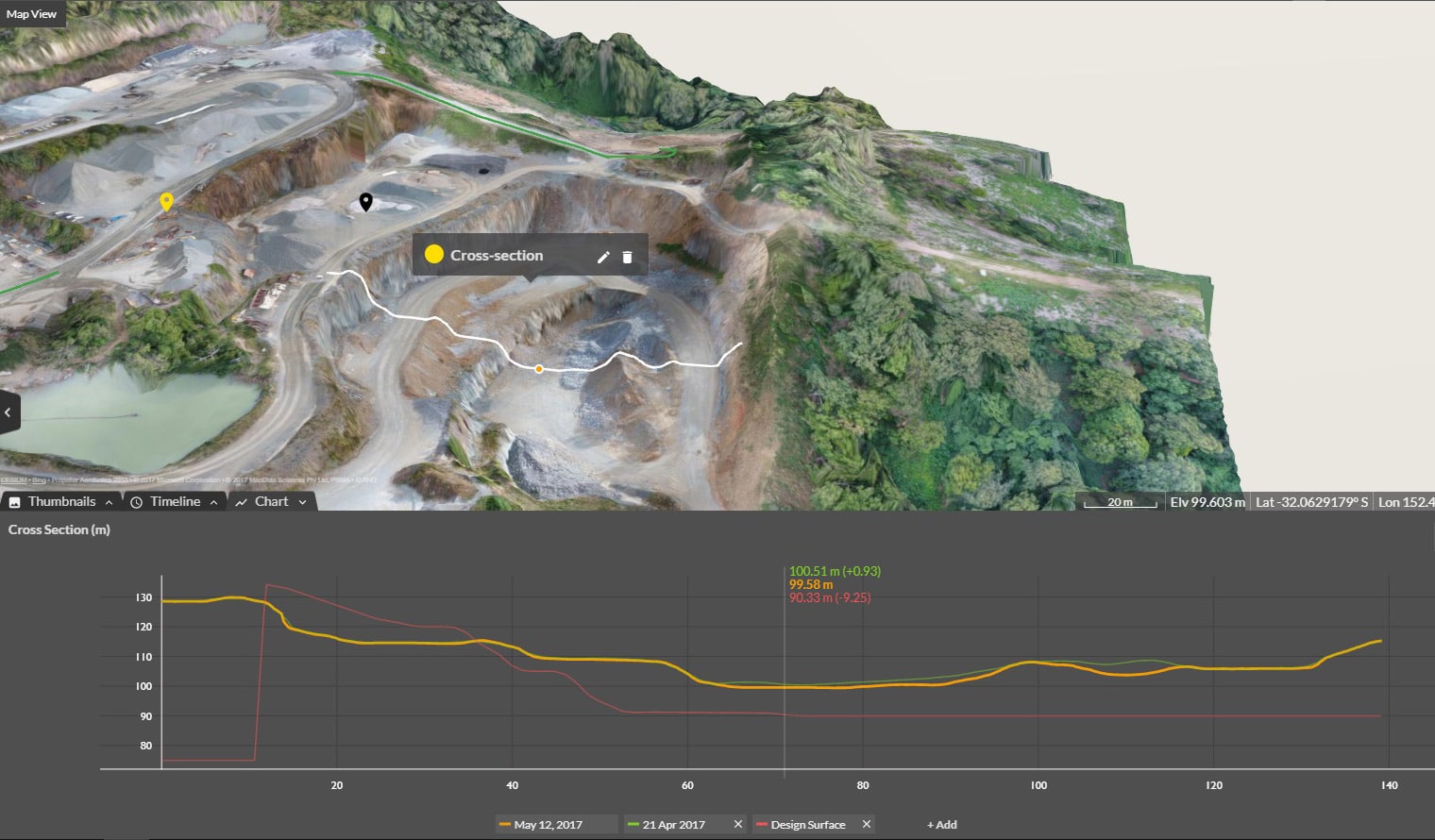
The Propeller platform brings both data streams into one shared map. Survey captures from drone flights give you high-precision surface data, cut/fill volumes, and progress against design. DirtMate telematics layer in the machine activity that produced those results. So instead of wondering why earthwork volumes aren’t matching your schedule, you can see exactly what the fleet was doing during that period and make the call on what needs to change.
This is the command center model: one map, two data streams, full operational picture. It replaces the back-and-forth between field reports, survey turnarounds, and gut-feel estimates with a single source of truth that updates in real time. Learn more about how it all fits together on the Propeller platform overview.
What better equipment allocation looks like in practice
A real decision, made in minutes
Picture a VP of Operations overseeing a large earthworks project with six machines running across two zones. It’s Wednesday morning and the weekly numbers aren’t tracking against the schedule.
With telematics data in front of them, they can pull up the utilization view and see that two of the machines in Zone A have an idle ratio well above the others. Cross-referencing with the machine trails, it’s clear they’re stacking up at the same loading point, cycling inefficiently. One of those machines can be redeployed to Zone B, where cut volumes are behind, without any time lost to a site walk or a check-in call.
That decision, made in minutes, protects the schedule and keeps the fleet earning its keep. The progress tracking features inside Propeller give you the survey-side context to back up that call with data, not instinct.
TL;DR: Why fleet managers and VPs choose Propeller
- Track run/idle time and load counts with DirtMate telematics
- Identify slow or inactive machines with real-time location and trails
- Review cycle efficiency and speed analysis across your whole fleet
- Combine machine data with drone survey captures for a full site picture
- Redeploy underused assets fast, without a site walk
- Back every operational call with survey-verified progress data
- Run a tighter operation from one shared map
When fleet managers and VPs work from the same map as the rest of the team, the whole site moves faster.