From trash to treasure: Propeller’s top 5 waste management workflows

Read Time: 5 mins
Quick links
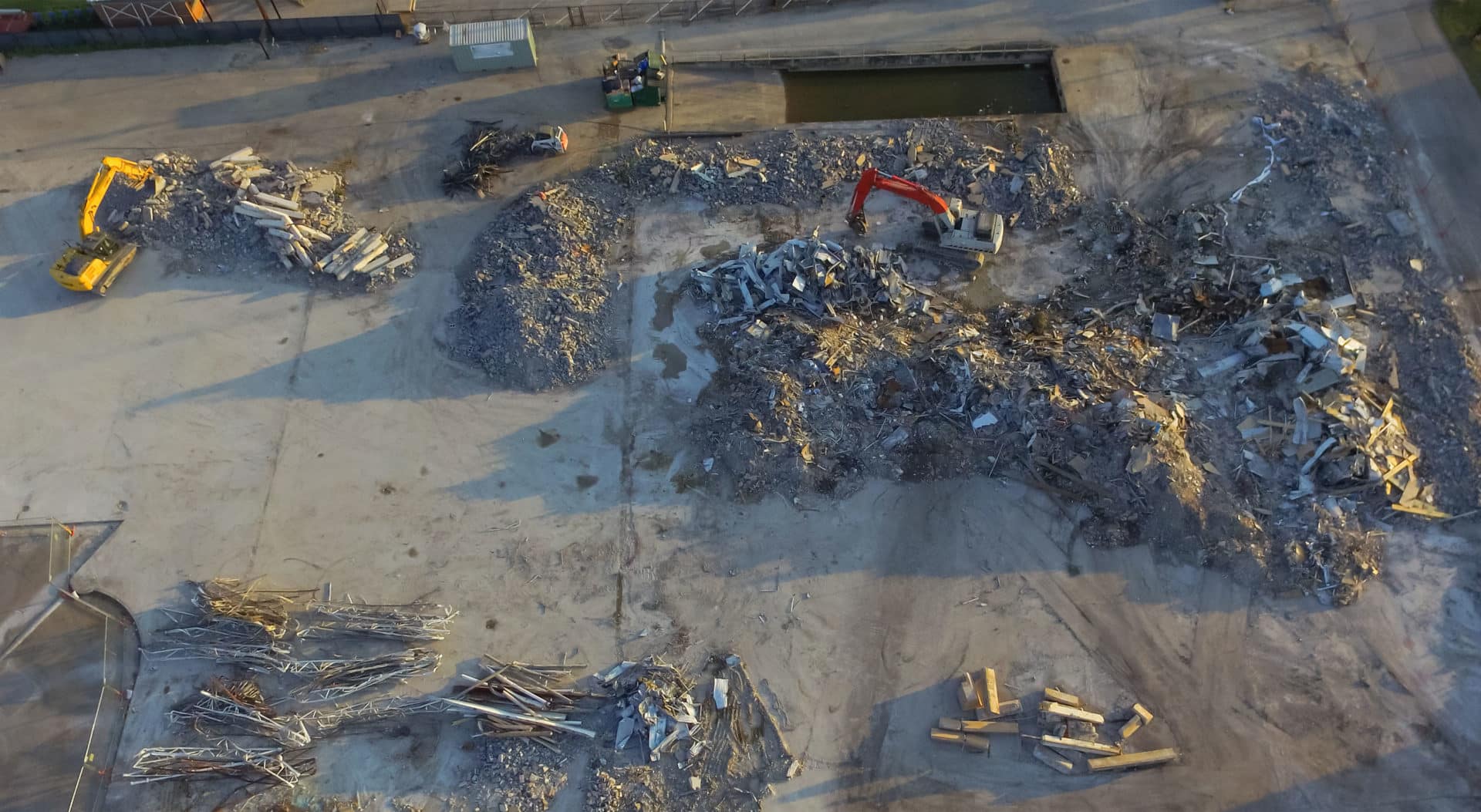
    Aerial photo of a waste management work site.

    Learn what a point cloud actually is and then how drone data is integrated with a point cloud to build a 3D worksite model. 

    From trash to treasure: Propeller’s top 5 waste management workflows

    The landscape of waste management workflows is as dynamic as it is demanding, presenting a unique set of surveying challenges. Landfills are not only vast, but they are constantly settling and changing in ways that can be hard to predict.

    In fact, landfills can be so challenging to traverse that they might only see a survey once or twice per year. Even if a landfill only takes in a few hundred tons of trash each day, grades and compaction change often enough that it’s nearly impossible to implement practical changes with such infrequent surveys.

    Add the unpredictability of natural disasters such as windstorms, wildfires, or flash floods, and you’ve got the perfect storm for a blind spot regarding your site’s efficiency and sustainability.

    Optimized landfills are the rising tide that lifts all boats; they keep landfill acreage to a minimum, reduce environmental impact, and increase profitability. So let’s dig into the top 5 waste management workflows that are changing the game for waste management.

    #1: Optimize long-term performance and profitability with volumetrics

    Propeller’s volumetric tools take all the guesswork out of monitoring landfill volumes, compaction rates, and overall productivity. It’s not just about seeing how much space you’ve used—it’s about understanding how well you use it. By identifying areas of compaction and monitoring cut/fill, we empower teams to optimize their site’s lifespan and make the most of every cubic yard.Here’s one example of how waste management teams use volumetrics to track their progress and keep their site productivity on target:


    volume calculation in landfill

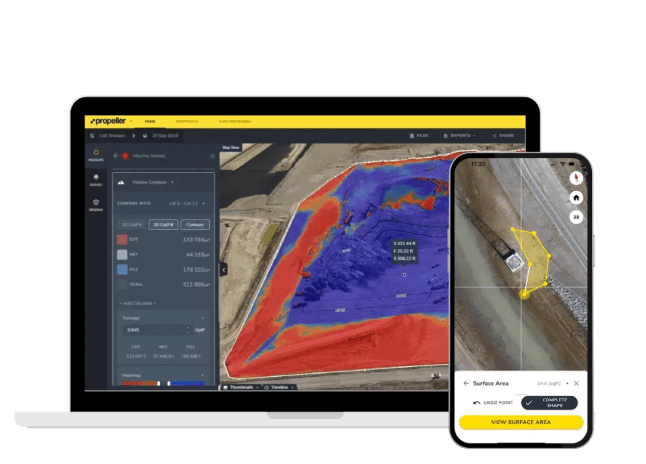
    In the screenshot above, the current cell is being compared to the final design of the landfill. The blue area indicates where the team can continue to fill without guessing how much space is left. Without a drone survey to fill in the blanks, the gap in between the finished cell and the current state is a massive blind spot. There would be no way to tell whether you’ve compacted material or built up flat decks well enough to ensure safety and efficiency on-site.

    Frequent surveys provide a detailed look at the cut-and-fill volumes that inform your decision-making. When you know how many tons you average per day and how many cubic yards of space you have available, you can also calculate—and optimize—your next fill sequence. 

    That’s because better data informs better decisions, like whether it’s worth having operators take an extra pass for a few weeks to increase compaction. Small increases in cell density can add up to millions of dollars over time, so it’s no exaggeration to say that understanding landfill volume and density can literally transform your business.

    On the other hand, if you only survey once or twice a year, you won’t know that your compaction wasn’t optimized until it’s too late to do anything about it. 

    “If you can improve the compaction by just a few percentage points, you can save millions of dollars worth of airspace and extend the life of the landfill site.” John Jones, National Landfill Technical Manager, Suez Australia

    #2: Maximize space and revenue by measuring outside slopes

    In waste management, space is money, and optimizing every inch means maximizing revenue. If you build too shallow, you’re leaving money on the table by not using all available space. 

    Our slope tool helps you build outside slopes as close to the optimal 3:1 ratio as possible and avoid expensive and inefficient sliver fills.

    slope tool for landfill

    Just as volumetrics help optimize compaction and cell density, even small improvements to slope make a big difference over time. 

    Imagine you find space for just five or ten thousand additional tons of trash. Multiply your price per ton by that figure, and you can see the direct link between drone surveys and reclaimed revenue.

    #3: Maintain balance by managing cover material

    Managing cover material is tricky. You don’t want to use more than you need because soil takes up valuable airspace. But use too little, and your landfill will have odor, litter, and environmental compliance issues.

    Propeller helps you calculate the perfect amount of cover material, ensuring operational efficiency and environmental compliance. 

    Surface area calculation in landfill cell

    Simply point and click to calculate surface area, then plug in the minimum depth of cover material required per cubic yard. With one simple calculation, you’ll get the exact volume of cover material you need each day, so you can plan ahead and set it aside for easy use.

    #4: Protect your site—and the environment—by understanding runoff

    Water management is a critical yet often overlooked aspect of landfill operations. Propeller helps teams anticipate and mitigate the risks associated with stormwater runoff, ensuring your site stays stable and environmentally responsible.

    hydrology preferential flow path in a landfill

    With easy-to-understand visuals that show where you have the greatest washout potential, you can send an operator to patch holes or regrade a cell for more even runoff.

    Propeller’s runoff tools also help you gut-check the efficacy of liquid catchpoints and overflow areas. One landfill even used Propeller to detect a 3cm liner breach, protecting the surrounding environment from contaminants.

    #5: Improve site management with Propeller’s mobile app

    In today’s digital age, having the right tools on hand makes all the difference. Propeller’s mobile app provides an intuitive and easy-to-share platform for monitoring, documenting, and navigating your site.

    With key spots like water catchpoints or gas collection systems referenced on an interactive map, a third party who’s new to the site can easily find what they need for inspections. 

    With Media, they can even take pictures and add notes about specific issues on-site to improve collaboration and response time.

    Propeller Mobile app

    Keep the “waste” out of waste management

    Whether you’re dealing with the aftermath of a natural disaster, navigating the complexities of landfill management, or simply striving for operational excellence, we’ve got your back. These 5 waste management workflows help landfills operate at peak efficiency, maximizing both airspace and profits.

    Together, we can redefine the landscape of waste management, one survey at a time.

    Ready to optimize today’s productivity and prepare for tomorrow’s challenges? Request a demo today.

    Quick links

      Related articles

      Better Blast Planning, Monitoring and Quarry Reporting Using Drone Data

      Making decisions with the most up-to-date and reliable information is critical for any site manager,…
      Six smart ways to use drones in mines and quarries

      The use of drones in mines and quarries is common, but these sites are highly…

      Cross Section Survey in a Matter of Minutes Using Drone Data

      With the power of drone-captured data and the Propeller Platform, surveying cross sections becomes as…

      Ready to learn how Propeller can power up your worksite?

      We’re happy to show you how Propeller can power your worksite, and boost productivity.

      Related articles

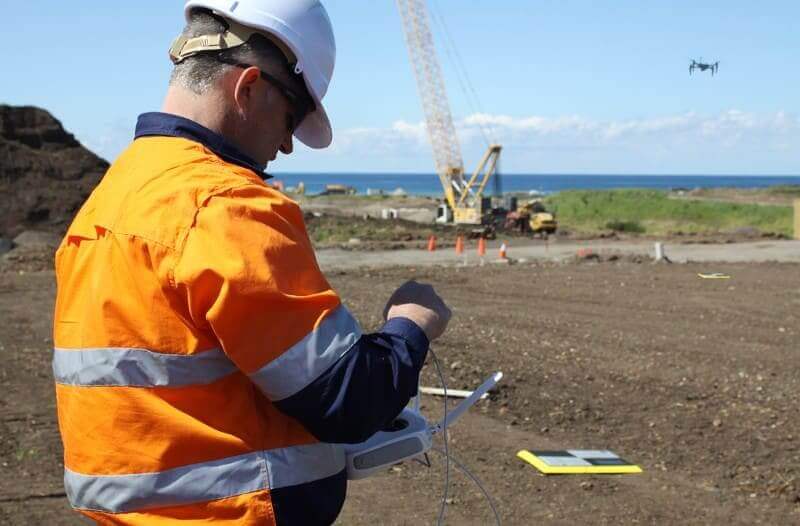
      Drone pilot in hi-vis flying a drone next to a crane, with an AeroPoint on the floor.

      Things To Know About Ground Control in Drone Surveying

      Ground control is the go-to option for turning drone data into highly accurate, survey-grade models.…
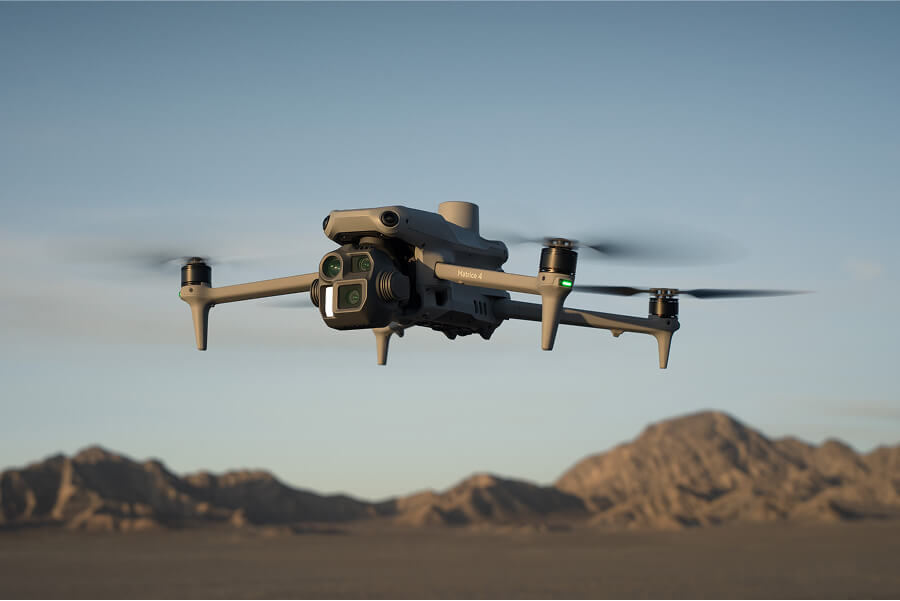
      DJI M4E flying in the sky

      Propeller’s Drone Guide: DJI Solutions for Commercial Operations

      At Propeller we love testing new drone hardware and we are processing hundreds of drone…

      Telecom Tower Inspection using DJI Phantom 4 Pro: Step-by-Step Guide

      A few weeks ago a new DJI Phantom 4 Pro was delivered to our office.…