Earthwork is one of the most cost-sensitive phases of any civil construction or grading project. When cut and fill volumes drift, even slightly, the knock-on effects compound fast: rework, billing disputes, schedule pressure, and margin erosion.
The challenge is that traditional survey methods can’t keep pace with how quickly ground conditions change. By the time a volume report lands on a project manager’s desk, the site has already moved on. What most teams need isn’t just volume data. They need data they can act on, in near-real time, with enough accuracy to stake decisions on.
That’s exactly what cut and fill progress monitoring, done right, delivers.
What cut and fill monitoring actually involves
At its core, cut and fill monitoring is the process of comparing your current site surface against a reference (whether that’s a design surface, a previous capture, or an established base map) to understand what’s been moved, what still needs to move, and where you stand against plan.
The key outputs are cut volumes (material that’s been excavated or removed from a defined area), fill volumes (material that’s been placed or compacted), and net variance (the difference between what’s happened and what was planned).
These numbers drive subcontractor payment verification, progress billing, daily production targets, and end-of-phase reconciliation. The precision you bring to them determines how confidently you can defend those figures to owners, clients, and project stakeholders.
Why accuracy at the 1–3cm level matters
High-precision ground control changes what the numbers can do
Not all survey data is created equal. Rough estimates from visual inspection or GPS-grade methods can carry errors of 10cm or more, which, across a large polygon, translates to significant volume discrepancy. For a 10,000m² site, a 10cm vertical error can mean hundreds of cubic metres of miscalculation.
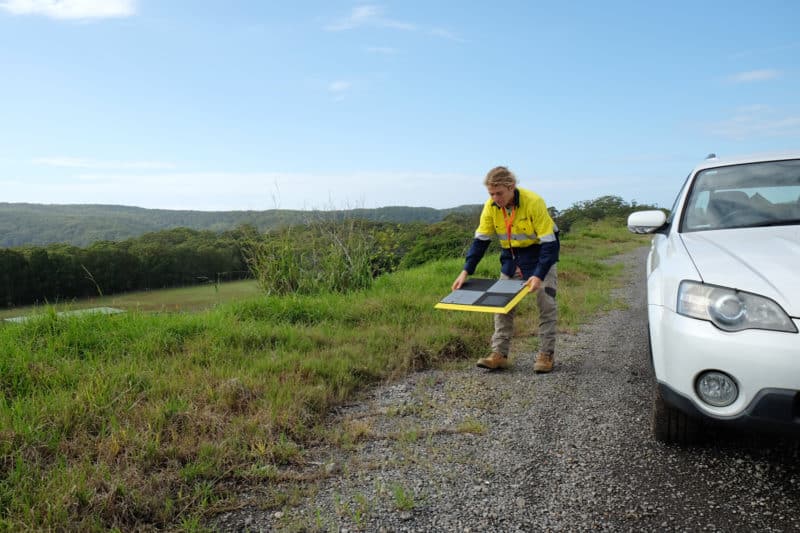
High-precision ground control, like that achieved through AeroPoints, brings that vertical accuracy down to 1–3cm. At that level, you’re not estimating. You’re measuring. That distinction matters enormously when the numbers are used to verify subcontractor claims, track design compliance, and prevent over-excavation.
Verify subcontractor claims. If your earthmoving contractor bills for X cubic metres of cut, your survey data should confirm or contest that independently. A defensible single source of truth removes ambiguity from payment conversations.
Track design compliance. Comparing surfaces to design at high precision tells you whether fill is building correctly to subgrade or finish grade, not just approximately, but to a standard that holds up to engineering scrutiny.
Prevent over-excavation. Cutting too deep costs money twice: once in the unnecessary dig, and again in the fill material needed to correct it. Catching deviation early, with accurate data, stops the bleed before it compounds.
From weekly reports to continuous visibility
Survey-ready data, updated as frequently as you need it
The traditional model of survey crew, manual stakeout, and weekly or fortnightly report introduces a structural lag that’s hard to manage around. A site can move a significant volume between survey intervals, and errors caught late are expensive to address.
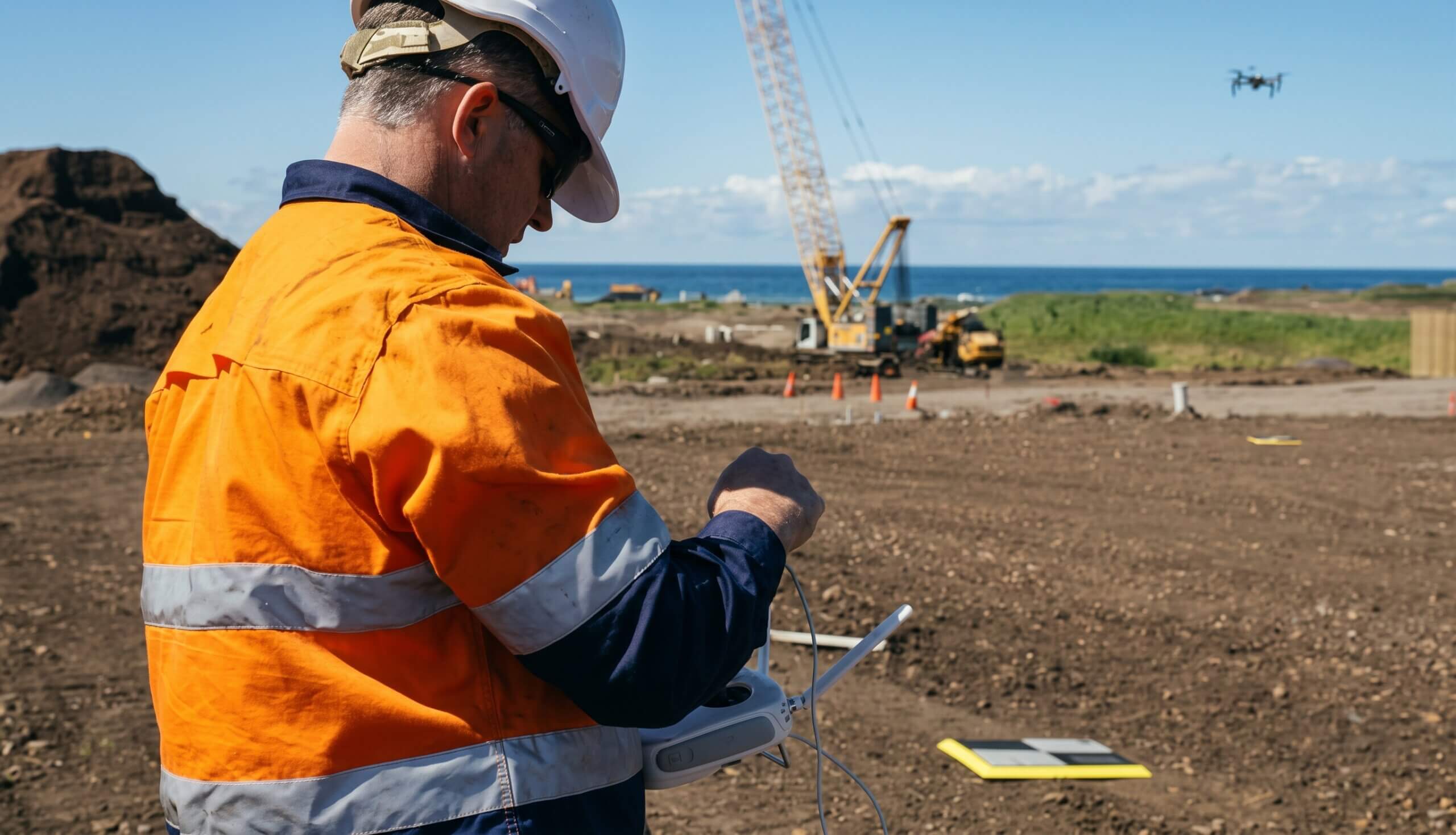
Modern cut and fill progress monitoring using aerial capture and photogrammetry processing closes that gap. Survey-ready data can be captured, processed, and loaded into a shared platform within the same day or the following morning, giving site teams a live picture of where they stand against design, updated as frequently as surveys are flown.
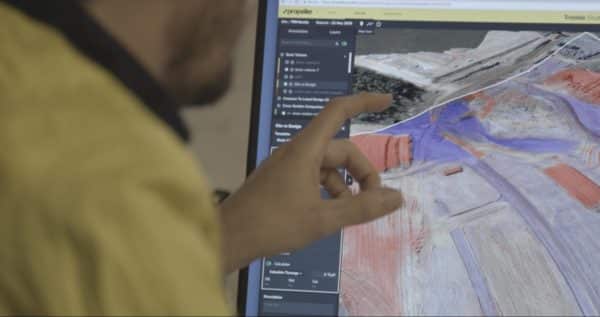
Within the Propeller platform, that data surfaces as cut-fill to design (compare any survey surface against your design surface: subgrade, finish grade, mine plan, or cell design), cut-fill to survey (compare any two captured surfaces to quantify what moved between them), volume calculations with full audit history, and a timeline view that traces exactly how the site has evolved over time.
The result is a continuous, timestamped record of cut and fill activity, not a snapshot from two weeks ago.
The single source of truth for subcontractor payments
Defensible data that ends the guesswork
Volume disputes between contractors and subcontractors are common, expensive, and often avoidable. They tend to arise when each party is working from different data: the sub’s load counts versus the GC’s manual estimates, and neither dataset has the precision to settle the disagreement objectively.
High-precision aerial survey data changes that dynamic. When you’re capturing the site with AeroPoints providing ground control accurate to 1–3cm, your volume calculations become a defensible reference point that’s difficult to argue with. The math is in the surface, not in someone’s tally sheet.
Pay-as-you-go earthwork contracts: Where billing is tied to volumes moved per period, independent verification protects both parties.
Fixed-price contracts with scope creep risk: If site conditions don’t match the original design intent, documented survey data establishes exactly what changed and when.
Multi-subcontractor sites: Where different crews are responsible for different zones, individual polygon reporting lets you reconcile each scope area independently.
Integrating cut and fill monitoring into your workflow
The most effective teams treat cut and fill monitoring not as a one-off check at milestone phases but as a regular cadence, captured daily or weekly depending on production pace, woven into how the site operates.
- Establish a base map early
Before material starts moving, capture the existing ground as your reference surface. This baseline becomes the anchor for all subsequent cut and fill comparisons and protects you from disputes about what was there to begin with. - Set up design surfaces
Upload your design files (DXF, DWG, LandXML) into the platform and designate them as comparison targets. From that point on, every survey capture automatically tells you how the site compares to design intent. - Run volume reports per scope zone
Draw polygons aligned to your contract zones, subcontractor scope, or phase boundaries. This lets you pull volume figures that map directly to your billing and scheduling structure. - Review after major earthmoving events
After a significant push, when a large cut section is completed or a major fill layer is placed, a survey gives you immediate verification before the next phase begins on top of it. - Use the data in daily standups
A cut-fill heatmap takes seconds to review and tells a project team everything they need to know about where the site stands. That’s the kind of visibility that keeps decisions fast and corrections early.
Accuracy, accountability, and confidence
Cut and fill monitoring at high precision isn’t just a technical upgrade. It’s a shift in how earthwork projects are run. When volumes are accurate, payment conversations are simpler. When comparisons are near-real time, problems get caught before they become expensive. When the data is shared and accessible on one platform, everyone (field, office, and project stakeholders) works from the same picture.
Volume calculations and progress tracking are core to how Propeller is built, because that’s core to how earthwork projects succeed. If you’re still reconciling volumes from weekly survey reports or relying on load counts to validate subcontractor invoices, there’s a more accurate way to do it.