Learn what a point cloud actually is and then how drone data is integrated with a point cloud to build a 3D worksite model.

Learn what a point cloud actually is and then how drone data is integrated with a point cloud to build a 3D worksite model.
From mining for raw materials to carbon emissions, every part of construction has the potential to impact the planet. Some of the most significant impacts include:
But the construction industry is also essential to sustaining human life as we know it, and environmental, social, and governance (ESG) change can’t happen overnight.
In that spirit, this article will take a closer look at a few of the biggest contributors to earthworks waste. We’ll analyze the ways that drones and ESG technology can help contractors minimize impact so we can work toward a collectively reduced environmental footprint.
As haul trucks move on-site, they consume massive volumes of diesel fuel. If traffic patterns or workflows are inefficient or unclear, we risk consuming more fuel than necessary. Even simple road grades can make a big difference in fuel burn over time.
If you have a machine that idles for an extended period of time, the productivity of that machine decreases while the fuel burn and labor costs are constant, leading to a relatively high waste for little reward. On top of idle time, if you have a machine that moves through the site inefficiently, you’ll burn more fuel than necessary to complete the job.
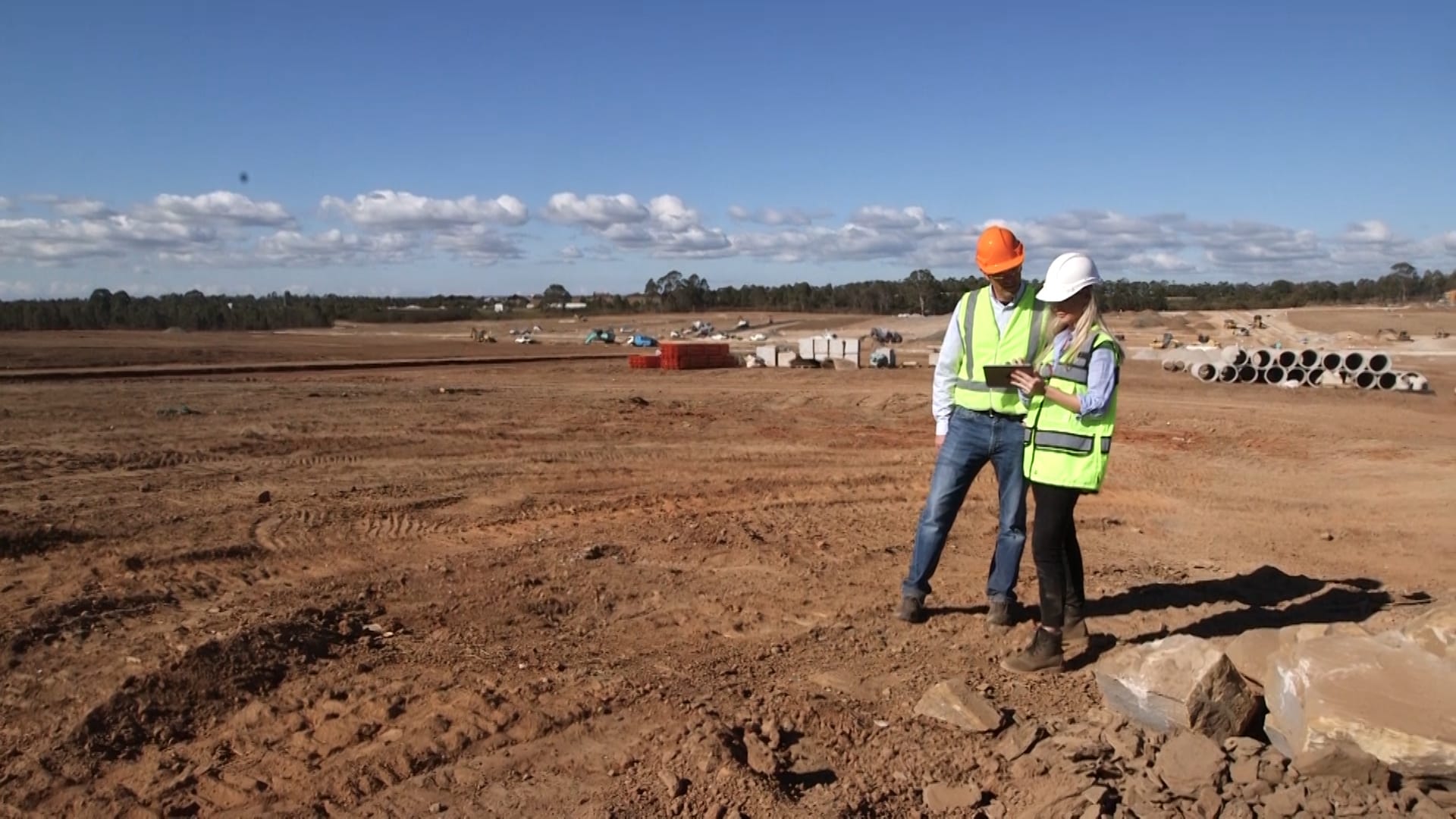
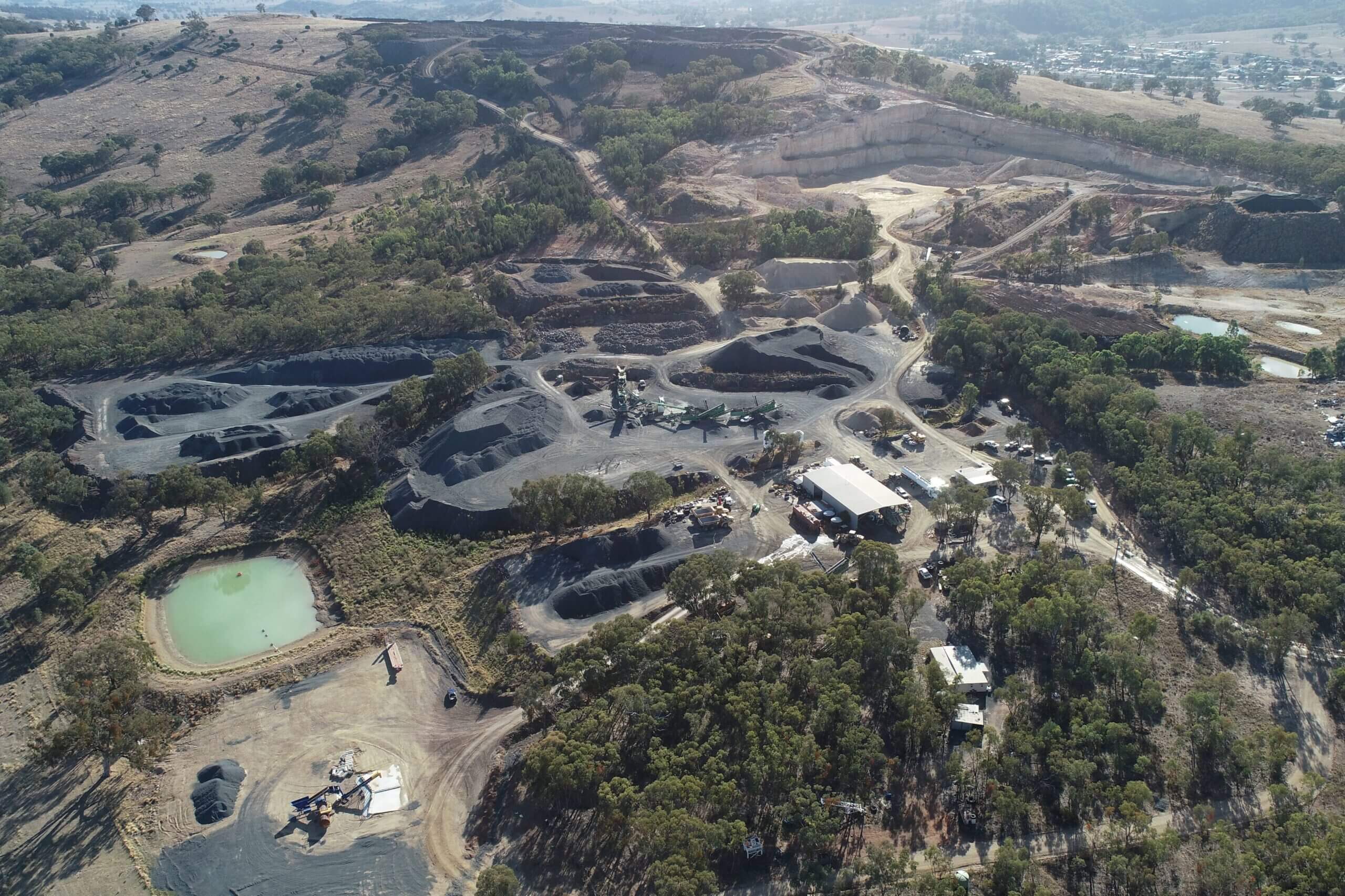
The key to reducing the fuel burn associated with inefficient or idle machines is to increase visibility into worksite production and operations. With the help of drone surveys, site managers can quantify and measure the distinct zones of a project, making on-site operations more efficient than ever before.
Drones also support effective haul road maintenance by calculating slope, ensuring that sites conform to safety standards, reducing fuel burn, and minimizing wear on equipment.
Where drone surveys tell you what is happening on your worksites and when, machine telematics fill in the gaps by telling you why. Drones capture data by flying over a worksite, but DirtMate collects critical day-to-day production data from the equipment on the ground.
What is DirtMate? DirtMate is an easy-to-install and cost-effective machine tracking system that’s unrivaled in the industry. With DirtMate, you get updated material volumes and productivity data every half hour from any device, so you can ensure your projects stay on track.
For example:
From road grades and berm height to traffic patterns, site managers can easily see what’s happening on-site and make appropriate adjustments to increase efficiency, optimize machine usage, and reduce fuel burn.
Even with the best-laid plans in place, project delays can and will happen. The reasons can vary depending on the time of year, project complexity, stakeholders involved, geographic location, and more.
Project delays are more than a nuisance—they’re a source of increased environmental impact and higher overall cost. According to the Construction Industry Institute, rework represents between 2% and 20% of total costs, averaging about 12%. Rework also extends project timelines, which can have ripple effects across an entire project lifecycle, including its overall environmental impact.
Without a clear line of sight into progress, contractors are less able to get a handle on issues before they become major problems. That’s why drone surveying is one of the surest routes to minimizing project delays.
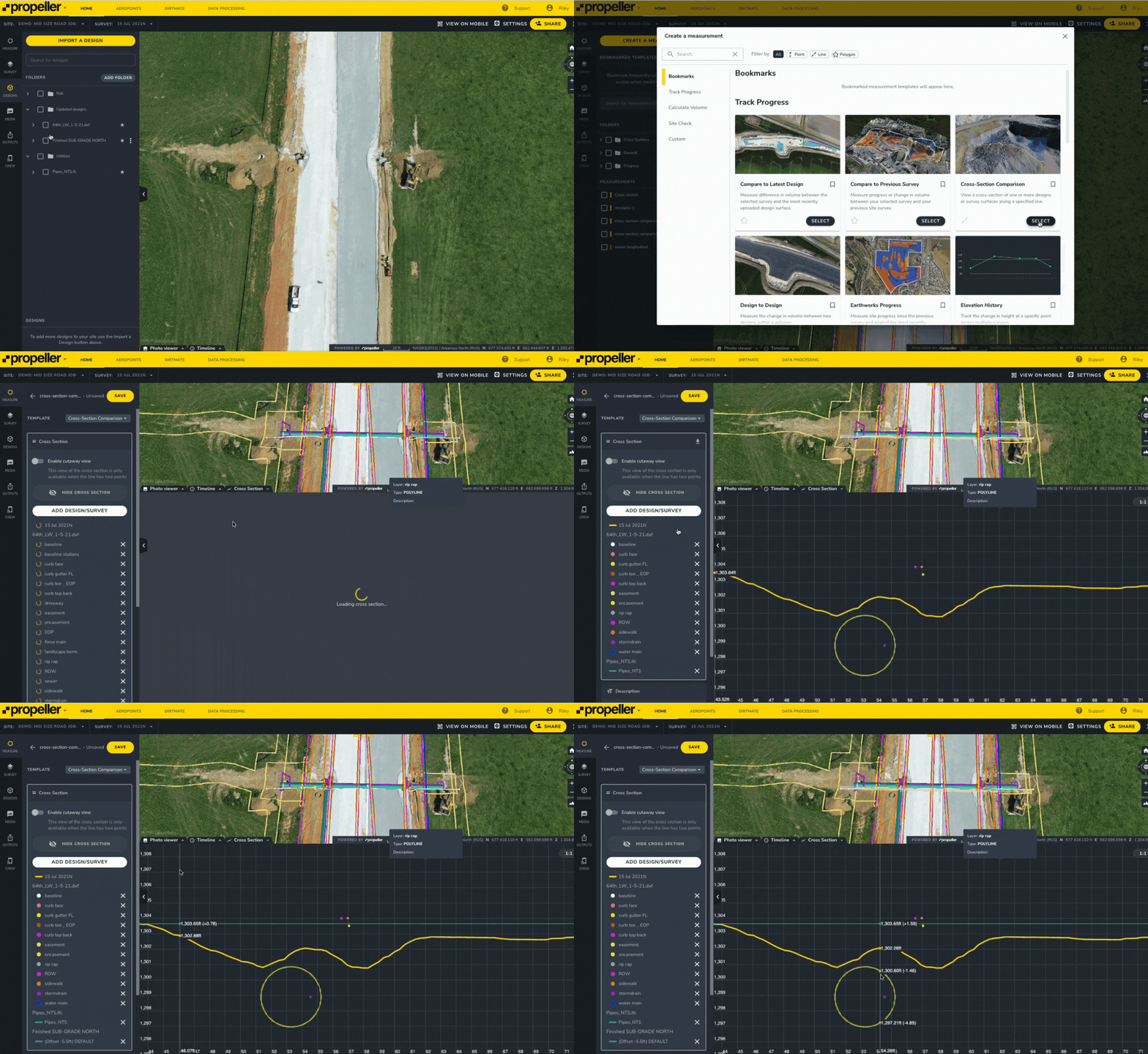
Drone survey data and 3D mapping have proven to be a reliable source of information that helps prevent rework and resolve disputes when they occur. With continual progress monitoring throughout a project, site managers can make swift, well-informed decisions about how work is progressing against design. Catching problems early helps teams avoid costly, environmentally damaging rework.

Not only does eliminating rework prevent the waste of natural materials, it also minimizes the movement of heavy machinery, keeping carbon emissions as low as possible.
Creating an accurate estimate for an earthworks project can be a delicate balancing act. Bid too high, and you could lose the business to another firm. Bid too low, and you could lose money. (Sometimes a lot of money.)
Traditionally, bids have been based on the overseeing engineer’s final design and the best data available on current ground conditions—which might come from old and inaccurate surveys.
Without good information about what a site will look like when work begins, contractors can’t possibly estimate a project’s scope, which includes its ultimate environmental impact.
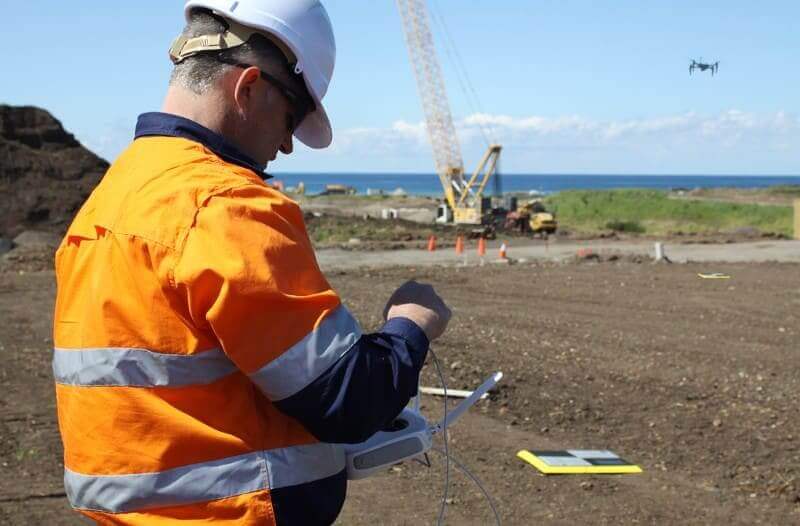
Drone surveying technology offers numerous benefits over traditional survey methods: it’s faster, more cost-effective, and produces easier-to-read results. Each drone survey yields millions of data points in the form of a 3D map that becomes a visual reference point, anchoring all stakeholders in accurate, up-to-date measurements throughout the project.
Flying a drone before bidding helps perfect the balancing act by preventing both under- and overbidding, helping teams craft competitive bids while maximizing their profit margins.
Accurate earthwork estimates also help keep projects within environmental parameters. By starting with a more accurate scope of work, environmental impact estimates will more closely resemble actual project reporting, keeping on-site operations on the right side of regulators.
Efficiency is the undercurrent that drives sustainability. Less waste isn’t just beneficial for budgets and timelines—it’s great for the environment, too.
Drone surveying unlocks efficiencies at every project stage, from pre-planning phases to ongoing site operations. Here are just a few of the environmental wins that stem from drone survey accuracy:
When a worksite functions as efficiently as possible, it means less waste, speedier project timelines, and—most importantly—fewer mistakes. Accuracy is a win for worksites, a win for project teams, and a win for the planet.
Ready to support your sustainability efforts with tech? Request a demo today.
We’re happy to show you how Propeller can power your worksite, and boost productivity.