If you’re struggling to find qualified, skilled workers to fill open positions on your job sites, you’re not alone. According to a proprietary model developed by Associated Builders and Contractors (ABC), the construction industry will need to attract an estimated 546,000 additional workers on top of the normal pace of hiring in 2023 to meet the demand for labor. ABC also states that the construction industry averaged more than 390,000 job openings per month in 2022, the highest level on record.
Furthermore, the industry unemployment rate of 4.6% in 2022 was the second lowest on record, only marginally higher than the 4.5% unemployment rate observed in 2019, according to the Bureau of Labor Statistics.
How the labor shortage could affect the U.S. Infrastructure Investment and Jobs Act
The shortage of construction workers can make it difficult for companies to take full advantage of the The Infrastructure Investment and Jobs Act (IIJA) aimed at modernizing U.S. roads, railways, bridges, and energy production. Without enough workers, projects can’t commence, or if they are underway, timelines tend to lapse leading to missed deadlines or completion dates. Also, lead times for hiring subcontractors are becoming longer. Some companies are unable to accept new projects that will move their businesses forward because the labor simply isn’t available to handle the work. In virtually no other industry is the gap between available workers and opportunity wider than in civil construction.
Solving the labor issue
To compete with other industries and attract new talent, civil construction and earthworks companies need to adopt advanced digital technology. Not only do these solutions improve efficiency and team collaboration, but they also appeal to the younger, tech-savvy generation who want to work with these tools. To execute the ambitious agenda of the IIJA, the industry will need to build a larger skilled workforce, which will help to avoid overstretching current workers and cut down on employee burnout. Adding more skilled workers can also help keep projects on time and within budget.
Understanding the reasons behind the labor shortage, and getting creative with how you address it, can help you accomplish more with a smaller workforce—without sacrificing quality or your bottom line.
How cutting-edge technology can help you tackle the construction labor shortage
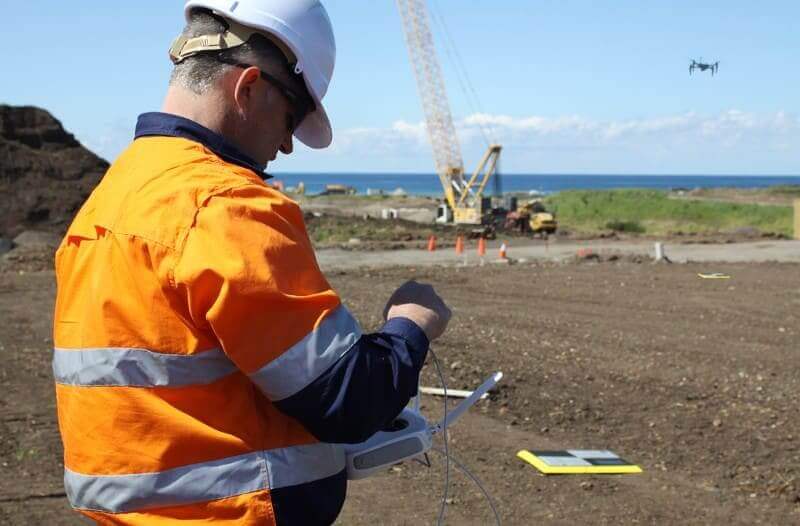
The simplest—and fastest—way to address the skilled labor shortage in construction is to make the most of the workforce you have. The right construction software, combined with an automated drone surveying workflow, can have a dramatic impact on your day-to-day efficiency.
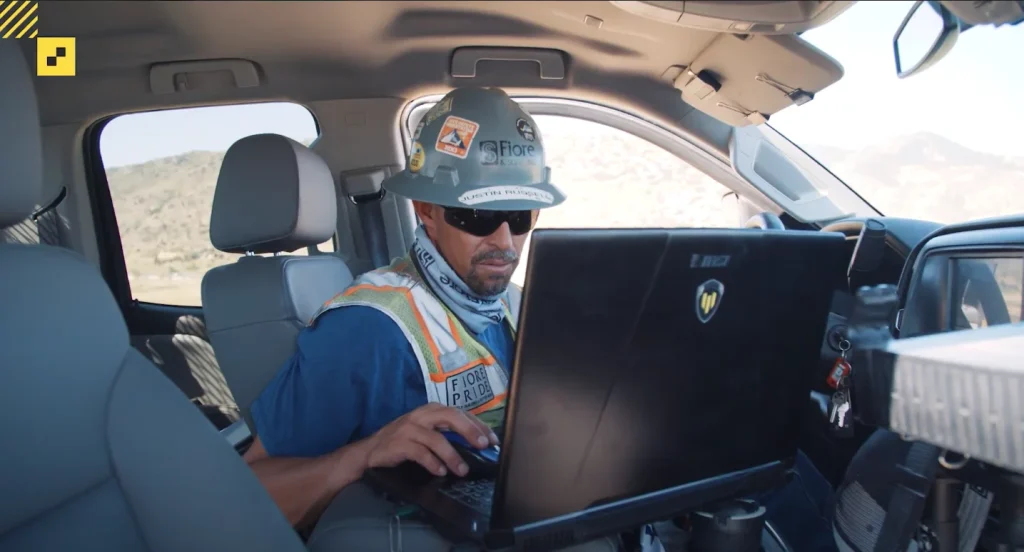
Colorado-based Fiore’s Head of Survey, Justin Russell, went from topo-ing one site a day to as many as six, simply by incorporating drone surveying technology into his regular workflow. Check out our video series on how Fiore uses drone technology.
The right construction software streamlines efficiency on your worksites by:
- Improving communication: Workers spend less time waiting on up-to-date survey results or material quantities, and instead self-serve to solve problems as (or before) they happen.
- Eliminating misallocation and unnecessary downtime: Teams no longer waste valuable time on worksites waiting for a necessary piece of equipment or for another team to finish before they can begin.
- Increasing accuracy: Drones are capable of reaching the same level of accuracy as a base and rover, in far less time. Anyone with a drone pilot license can fly them to complete a survey as often as necessary, giving your team an up-to-date—and accurate—picture of your worksite. Learn more.
- Keeping workers safe: With drones, there’s no need to send workers out in the field to navigate dangerous terrain and heavy equipment. Learn more.
- Creating a tech-savvy culture: Construction has famously trailed behind most industries when it comes to adopting new technology. With a company that’s on the leading edge, you’ll attract a younger generation of workers who adapt easily to new technology and appreciate its benefits—another key to addressing the skilled labor shortage in construction.
- Invest in your workforce: Companies must show their employees that they’re valued. One way to accomplish this is by investing in training and workforce development to improve performance and increase worker satisfaction. Training also enhances safety and productivity, and attracts and retains employees.
Optimize your workforce with technology
Investing in new technology to help your current workforce increase collaboration, improve communication, and streamline efficiencies isn’t just a good idea; it’s a necessity. Today, more and more companies are making investments in cutting-edge tech like construction software and drone surveying workflows to optimize labor. In addition, other technologies, such as building information modeling (BIM) and augmented reality also appeal to Gen Z workers. They’re more likely to want to work for a tech-savvy company, so adopting a digital hiring process and expanding the technology you use in the office and on site can help your company look more attractive.
If your worksites are behind schedule and over budget due to a reduced workforce, how will you compete with companies who are using the latest tech to streamline their processes (and lower their bids)?
Construction software creates a centralized, easily accessible source of truth available to all who need it. Communication becomes faster and easier, both internally and with clients. With less on their plates, surveyors, foremen, project managers, and supervisors can accomplish more in less time.
Technology also helps eliminate the element of human error, which is inevitable with manual workflows and can result in cost overrun very quickly. The question isn’t whether you can afford to invest in new technology this year. It’s whether you can afford not to.