Reality capture vs. smart surveys: What’s the difference?

Read Time: 5 mins
Quick links
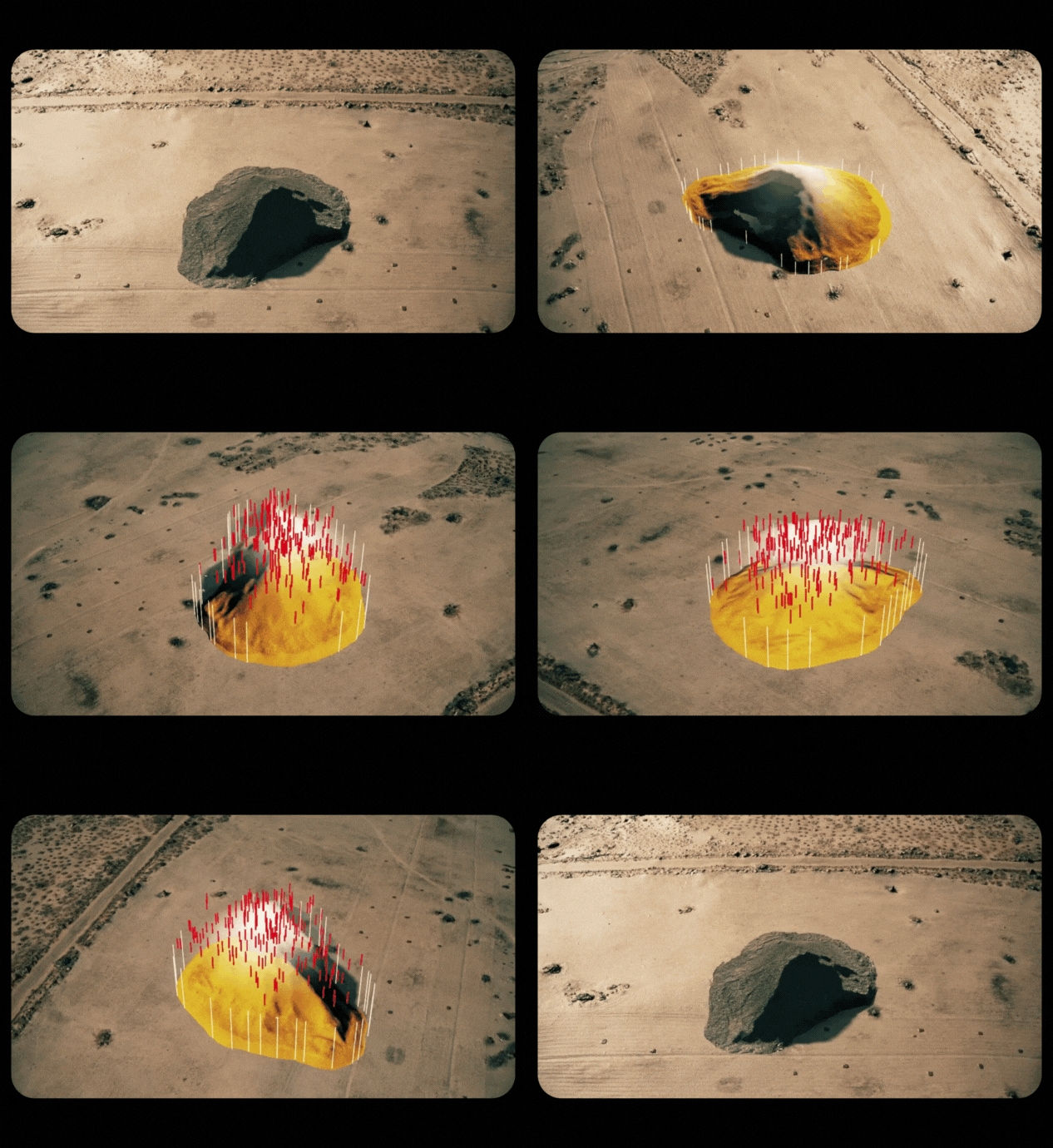
    stockpile gif

    Learn what a point cloud actually is and then how drone data is integrated with a point cloud to build a 3D worksite model. 

    Navigating the world of construction tech can feel a bit like listening to a navigation system that’s constantly rerouting. With terms like reality capture AI, drone photogrammetry, and machine learning flying around, it’s natural to feel a little lost. 

    To help you cut through the noise and make sense of the different types of drone survey tech out there, we thought we’d clear up the distinction between two terms describing 3D mapping on the modern worksite: reality capture vs. smart surveys. 

    The distinction can make a big difference at every stage of work, from pre-bid to project closeout, so it’s crucial to understand the differences between the two. Let’s dive straight in and untangle the pros and cons of different approaches to 3D mapping.

    3D reality capture
    3D reality capture powered by Matterport.

    Smart surveys: Level up your reality game

    Smart surveys yield all of the advantages of reality capture—which makes sense because reality capture is a component of a smart survey workflow. 

    Smart surveys combine the best of survey technology and GIS systems to create a consolidated solution that makes survey data simpler, faster, and smarter.

    There’s far more to smart surveying than realistic images. You can think of smart surveys as reality capture plus survey-grade accuracy—all the realism of 3D image mapping with the precision of a professional-grade survey. Smart surveys offer the best of both worlds to busy construction professionals who don’t just need to visualize their worksites but to accurately measure them, too.

    Ease-of-use and accuracy

    In the early days of drone image capture, construction teams had to double up their effort to get survey-grade results, combining drone flights with traditional base and rover surveying to provide a complete overall picture.

    Thanks to complete smart survey workflows like Propeller’s, drone surveying has come a long way over the past decade. Propeller yields survey-grade data, accurate to 1/10ft (3cm). (We’ll talk more about the proprietary hardware that helps us do that in the next section.)

    Reality capture may yield a digital reproduction of your worksite, but it can’t always give you the level of accuracy your business relies on. Without smart ground control to tie your results to verifiable points on the ground, there’s distortion in every image. Extrapolated over an entire worksite map, these distortions can be significant—and when it comes to earthwork, every centimeter matters.

    Integrated data capture

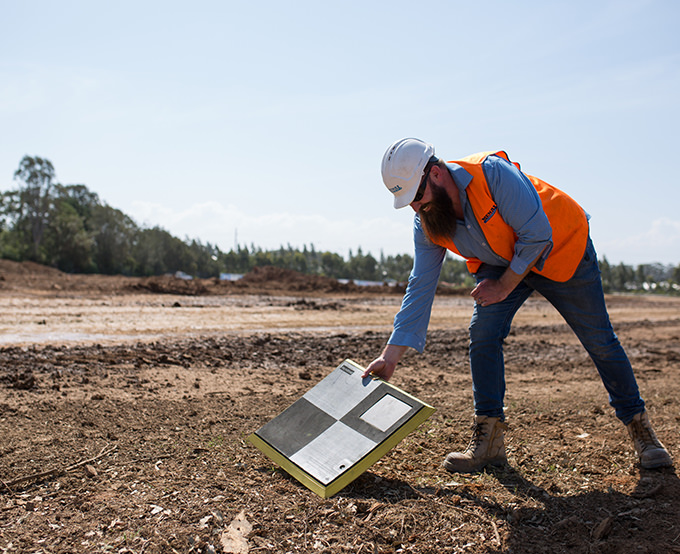
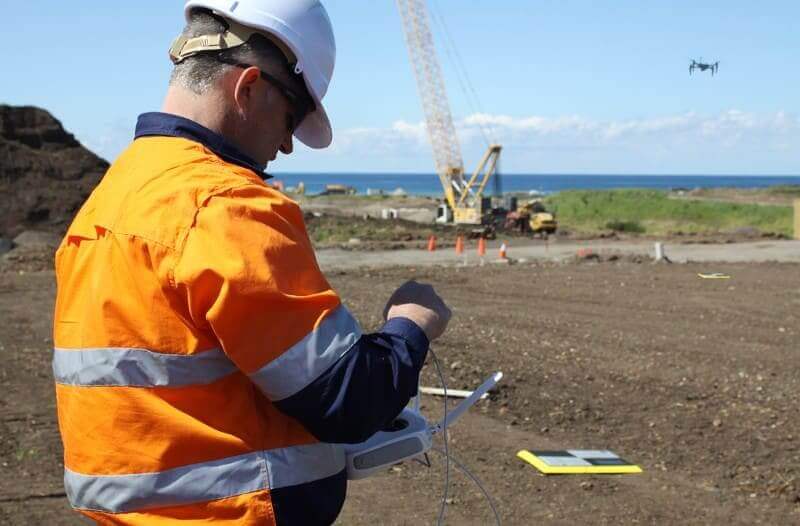
    Wondering what makes a survey workflow smart? It’s not just about drones; it’s about efficiency. Propeller’s smart ground control hardware, AeroPoints, turn regular surveys of even large worksites into a quick and painless process.

    With just one AeroPoint covering up to 150 acres, there’s no need to have teams manually shoot (and re-shoot) ground control points as the landscape changes. Simply place an AeroPoint in your survey zone, launch your drone, and watch as the two devices capture survey data automatically. 

    AeroPoints are the key to ensuring the high level of accuracy smart surveying provides—without any manual point-and-shoot. Some clients can survey entire sites in less than 15 minutes.

    In short: smart surveys bring speed and simplicity to survey data. The workflow’s accurate enough for experts and easy enough for beginners. 

    Learn more > 

    3D designs 

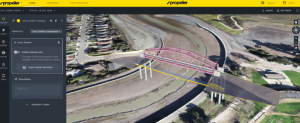
    While reality capture is all about visuals, smart surveys take it up a notch. Instead of just viewing a site, smart surveys allow you to overlay design schematics, allowing for a rich, multifaceted view of project progression. 

    As every contractor knows, not all the work is done on the jobsite. A significant amount of planning, measuring, and general legwork is done in digital design files. With smart surveys, you’re not limited to reviewing reality capture in 3D—you can do the same with your design. 

    Smart surveys help you explore your reality from a new perspective, allowing you to overlay design surfaces over orthophotos for the most useful view of work progress. By uploading design surfaces of the map, you’re able to visualize the past, present, and future state of your worksite — reviewing progress and making the needed adjustments based on the difference between the plan and the map.

    Learn more > 

    End-to-end workflow

    Reality capture software often presents this kind of piecemeal experience; your survey files, project documentation, and machine data are all compartmentalized. Often, you’re manually integrating additional data and searching for workarounds to get the high-level insights you’re after.

    With Propeller’s smart surveys, there’s no jumping between tools or getting lost in translation. Whether you’re mapping with aerial imagery 0r measuring stockpiles, in a technical or non-technical role, smart surveys make it possible to map, measure, and manage site activity yourself—from one hub.  

    “The whole process is so easy, I could almost have my kid do it. Initially, we wanted a smarter and faster way to complete stockpile inventory—but Propeller delivered so much more. Now, one picture says more than a thousand words.”

    Philip Andsen, Measurement Engineer, Svevia 

    Learn more > 

    Map, measure, and manage with smart surveys

    Running a construction project is a bit like orchestrating a symphony. From pre-bid estimates to on-the-job measurements, every element has to harmonize. Capturing reality through images isn’t enough to keep the modern construction professional competitive; without verified data behind the images, even the most stunning imagery is just that.

    Propeller’s smart surveys are designed with complete worksite harmony in mind. From drone data collection to in-depth machine analytics, 3D mapping flows seamlessly into boots-on-the-ground work. 

    Want to keep reading? 

    Quick links

      Related articles

      Better Blast Planning, Monitoring and Quarry Reporting Using Drone Data

      Making decisions with the most up-to-date and reliable information is critical for any site manager,…
      Six smart ways to use drones in mines and quarries

      The use of drones in mines and quarries is common, but these sites are highly…

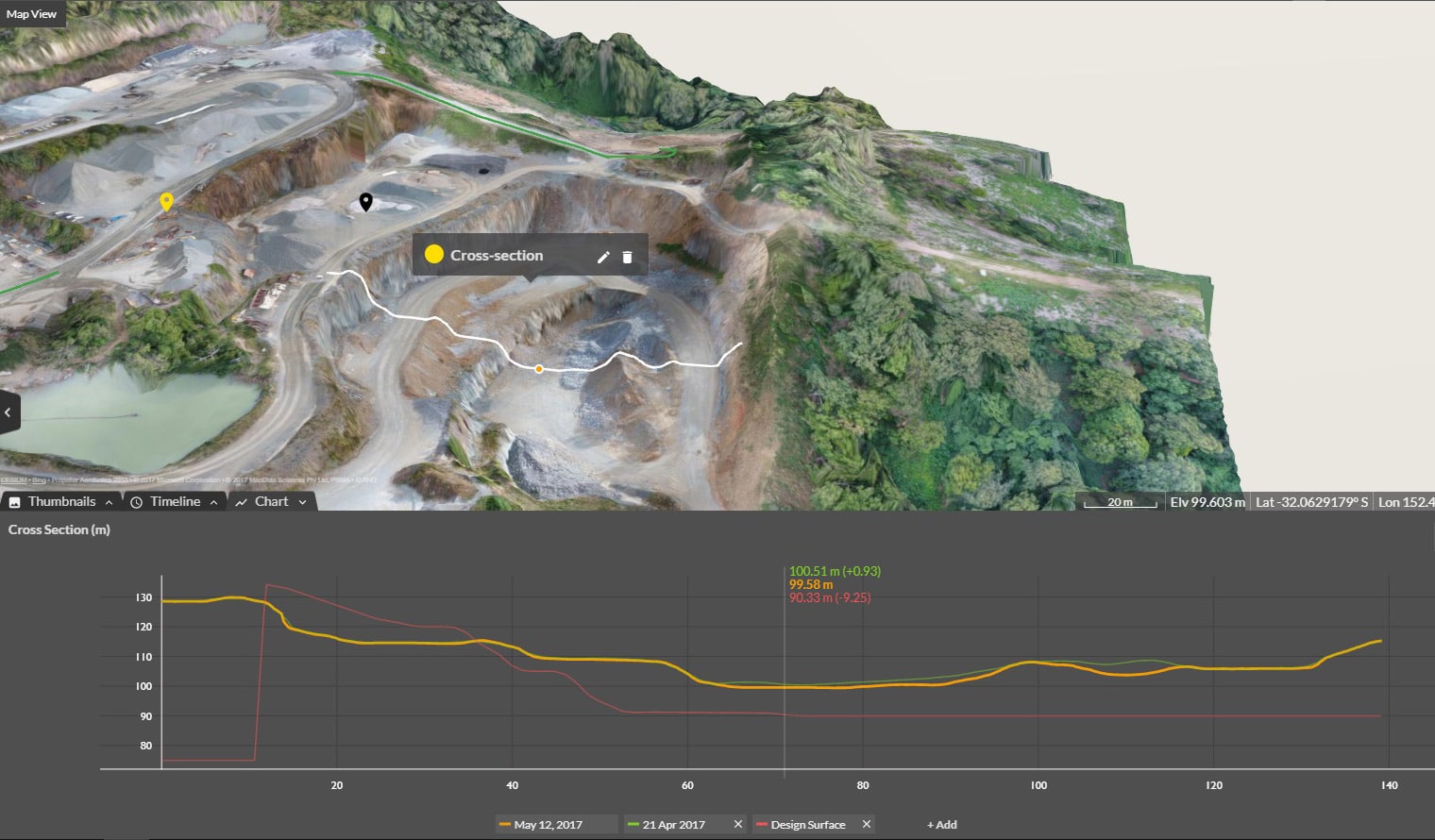
      Cross Section Survey in a Matter of Minutes Using Drone Data

      With the power of drone-captured data and the Propeller Platform, surveying cross sections becomes as…

      Ready to learn how Propeller can power up your worksite?

      We’re happy to show you how Propeller can power your worksite, and boost productivity.

      Related articles

      Drone pilot in hi-vis flying a drone next to a crane, with an AeroPoint on the floor.

      Things To Know About Ground Control in Drone Surveying

      Ground control is the go-to option for turning drone data into highly accurate, survey-grade models.…
      DJI M4E flying in the sky

      Propeller’s Drone Guide: DJI Solutions for Commercial Operations

      At Propeller we love testing new drone hardware and we are processing hundreds of drone…

      Telecom Tower Inspection using DJI Phantom 4 Pro: Step-by-Step Guide

      A few weeks ago a new DJI Phantom 4 Pro was delivered to our office.…