Handheld scanning: Everything you need to know

Read Time: 3 mins
Quick links

    The flight schedule doesn’t always match the work schedule.

    Trenches get backfilled. Stockpiles shift. Tight-access zones change before the next drone goes up. By the time the survey lands, the moment has passed. That’s the blind spot between flights and it’s where decisions get made without a current record to back them up.

    Handheld scanning gives your team a way to close it.

    The problem with flight cadence

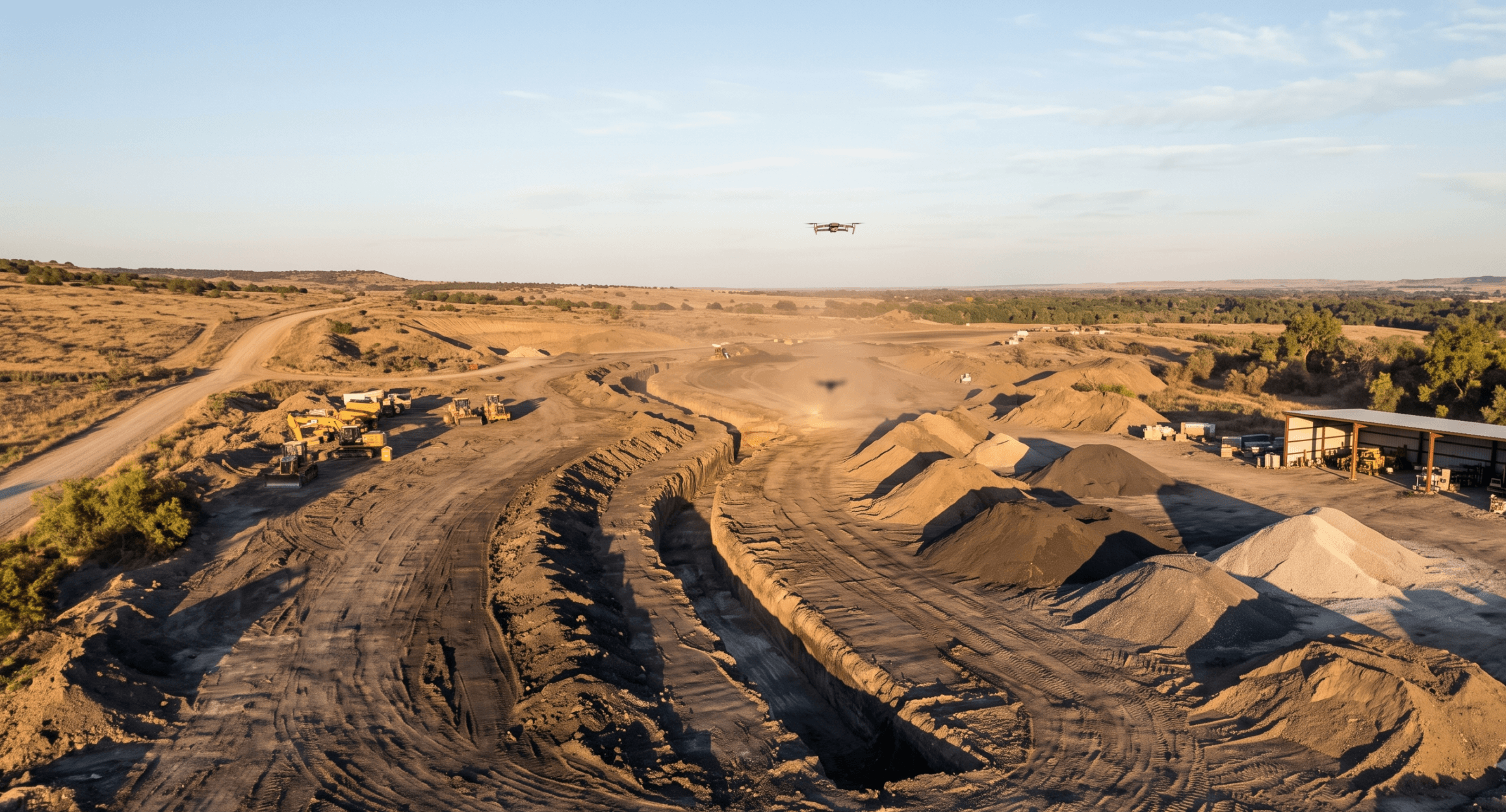
    Drone surveys are one of the most powerful tools in the site manager’s kit. Site-wide topo, cut/fill tracking, progress reporting — the value is real. But surveys run on a schedule. And the site doesn’t wait.

    The pre-backfill window closes fast. A stockpile gets moved before the next flight. A tight corner near active equipment changes shape overnight. By the time your next capture comes in, the record is already behind reality.

    That gap isn’t a failure of the survey. It’s just physics. Drone coverage is wide and consistent, but it can’t be everywhere at once. In between flights, decisions still get made, often without the data to back them up. That’s where delays creep in, rework risk goes up, and the field gets ahead of the office.

    What handheld scanning is (and isn’t)

    Handheld scanning fills the gap at the feature level. Anyone on site, with a phone and the Propeller mobile app, can capture a small area in 3D and upload it directly into Propeller. The results land in the platform alongside your existing drone surveys, so the full picture stays in one place.

    The workflow is straightforward: capture, upload, process, view. No specialist hardware. No additional software. No waiting for the next flight window.

    A few things worth being clear about upfront: handheld scanning complements drone capture, it doesn’t replace it. It’s designed for feature-level work: a trench line, a stockpile corner, a tight-access zone near a structure. It’s not built for site-wide topographic surveys or utilities mapping. Think of it as a way to fill the gaps, not cover the whole site.

    Where it fits in the workflow

    Three scenarios come up again and again.

    Trenches and excavations before backfill.

    Once the trench is covered, that moment is gone from the record. A quick scan before backfill gives you a documented 3D capture of the excavation: conditions, depth, what was there. No waiting, no lost data.

    Indoor, covered, and under-canopy stockpiles.

    Drone surveys can’t always see what’s inside a shed or under cover. A handheld scan gets eyes on those stockpiles and brings that volume data back into the platform where it can be tracked and measured alongside everything else.

    Tight-access zones near structures, canopy, or active equipment.

    Some corners of the site just don’t capture cleanly from the air. If there’s a structure in the way, canopy overhead, or equipment that limits flight paths, handheld scanning gives you a practical way to get that area into the record without waiting for conditions to change.

    How it works

    Open the Propeller mobile app and start a 3D scan. Walk the feature, keeping it in frame with strong overlap: slow and steady is the move here. Upload from the field. Propeller processes it. View it in the platform alongside your drone surveys.

    That’s it. The whole loop happens in the app. No extra steps, no external tools, no specialist to loop in.

    What changes for your team

    The most immediate shift is speed. Instead of waiting for the next flight to document a moment that’s already passed, teams can capture it on the spot and have it in the platform the same day.

    Pre-backfill moments get documented. Covered or hard-to-reach areas get into the record. The office can review without another trip to site. And when the drone does fly, it’s adding to a record that’s already more complete, not trying to backfill gaps from the week before.

    Over time, that adds up to a site record that reflects reality more consistently: from more people, more often, without adding complexity to the workflow.

    Try it on your site

    Handheld scanning is now in beta. If your site has blind spots between flights, join the beta and see what it looks like to have that gap in the record closed.

    Quick links

      Related articles

      Better Blast Planning, Monitoring and Quarry Reporting Using Drone Data

      Making decisions with the most up-to-date and reliable information is critical for any site manager,…

      Six smart ways to use drones in mines and quarries

      The use of drones in mines and quarries is common, but these sites are highly…

      Cross Section Survey in a Matter of Minutes Using Drone Data

      With the power of drone-captured data and the Propeller Platform, surveying cross sections becomes as…

      Ready to learn how Propeller can power up your worksite?

      We’re happy to show you how Propeller can power your worksite, and boost productivity.

      Related articles

      Drone pilot in hi-vis flying a drone next to a crane, with an AeroPoint on the floor.

      Things To Know About Ground Control in Drone Surveying

      Ground control is the go-to option for turning drone data into highly accurate, survey-grade models.…
      DJI M4E flying in the sky

      Propeller’s Drone Guide: DJI Solutions for Commercial Operations

      At Propeller we love testing new drone hardware and we are processing hundreds of drone…

      Telecom Tower Inspection using DJI Phantom 4 Pro: Step-by-Step Guide

      A few weeks ago a new DJI Phantom 4 Pro was delivered to our office.…