What is drone imaging?

Read Time: 5 mins
Quick links
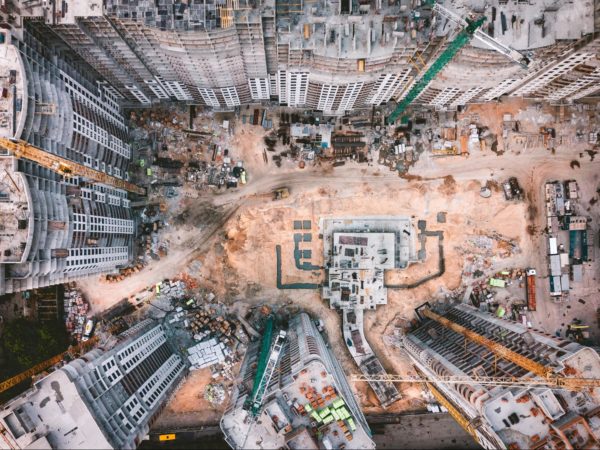
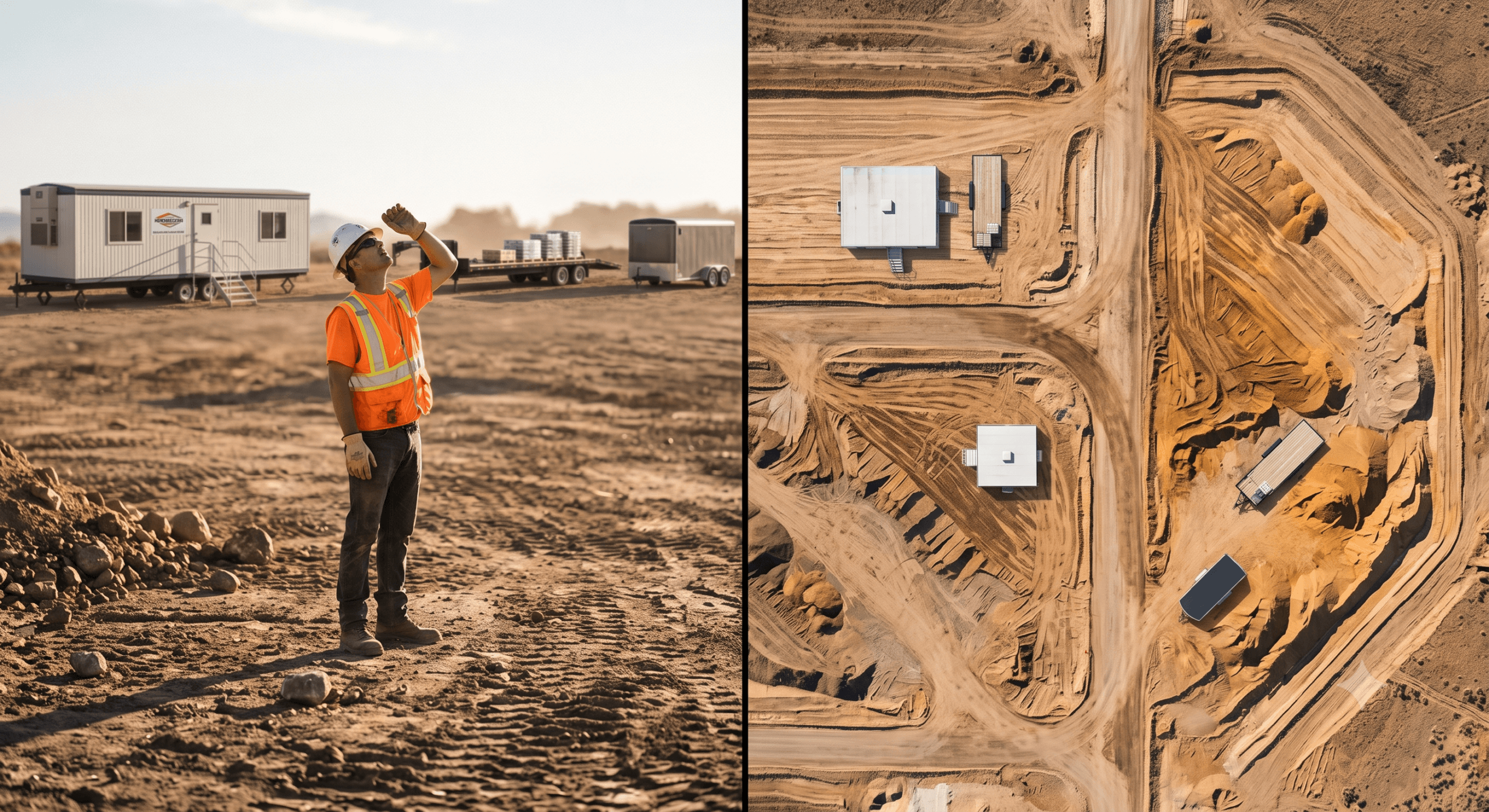
    Split-frame image showing a construction worker looking up from ground level on the left, and a top-down drone aerial view of the same earthworks site on the right

    Drone imaging is the process of capturing aerial imagery and visual site data using cameras mounted on drones. It gives construction, earthworks, and mining teams a fast, current view of their entire site from above, without the delays of manual walkthroughs or scheduled site visits. One flight covers the whole site in minutes, giving teams a shared, accurate picture that keeps decisions moving and projects on track.

    Drone imaging is the process of capturing aerial imagery and visual site data using drones flown above a project. It gives construction, earthworks, mining, and infrastructure teams a clear, current view of what is happening on the ground, without the delays of manual walkthroughs or waiting on scheduled site visits.

    This guide breaks down what drone imaging is, how construction teams use it, and why it has become a core part of day-to-day site workflows. You will learn what sets drone imaging apart from traditional photography, where it fits alongside drone surveying, and how the imagery translates into real operational value across a project.

    What is drone imaging?

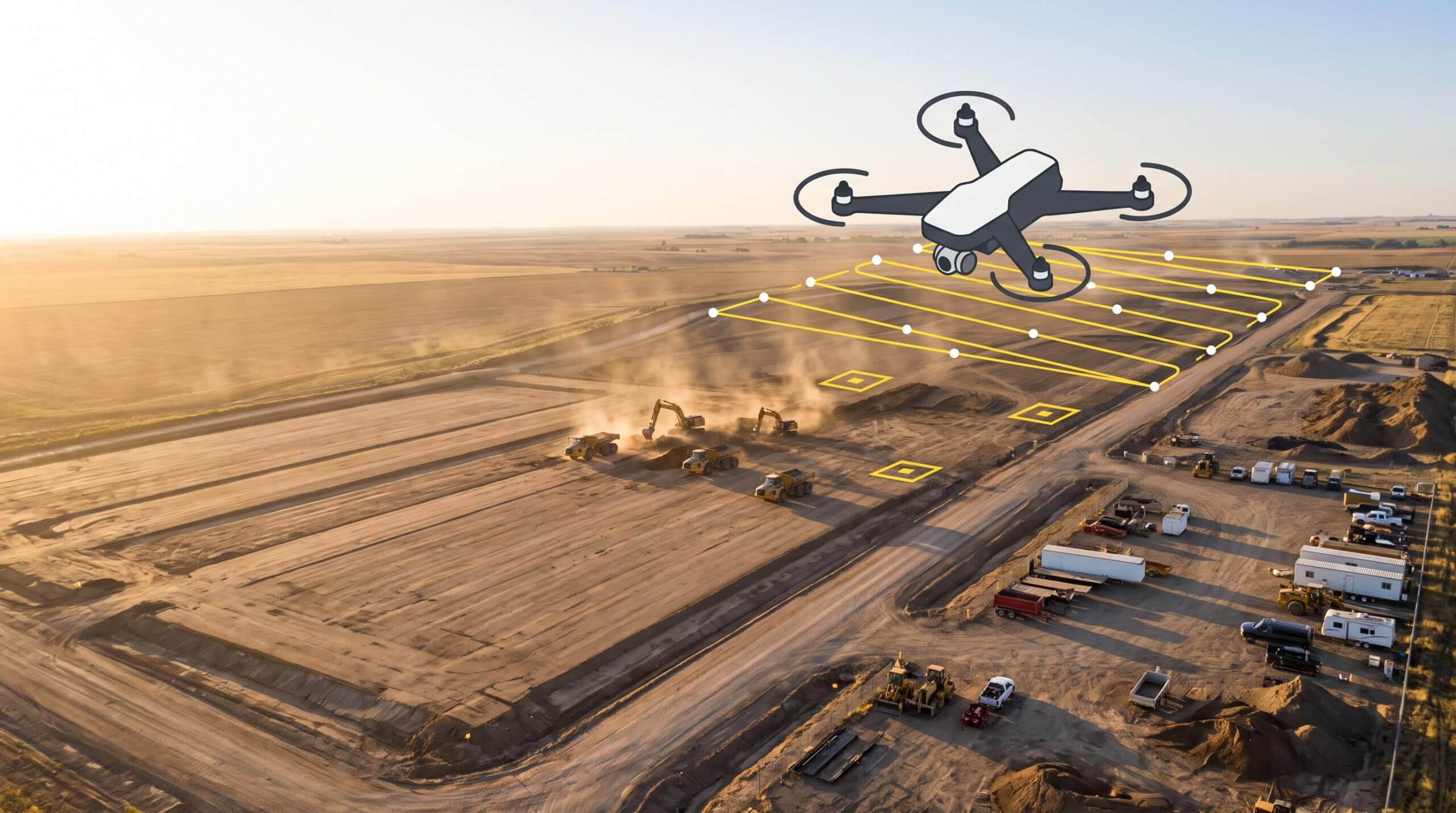
    Drone imaging uses aerial cameras mounted on drones to capture visual data from above a project site. In simple terms, it is a fast, repeatable way to see your entire site from the air and keep a visual record of how conditions change over time.

    The difference from traditional photography comes down to perspective, scale, and consistency. A camera on the ground captures one angle at a time, and a manned flyover is expensive and hard to repeat. A drone captures the whole site in a single flight, from the same vantage points, as often as your team needs it.

    Drone imaging can capture a range of visual data, including high-resolution still photos, video, oblique angle shots, and top-down aerial views. Each type serves a different purpose, from documenting a specific area of concern to building a complete picture of the site.

    On large sites, that reach matters. Walking a project to document conditions takes hours and still leaves blind spots, while a drone covers the same ground in minutes and captures every corner consistently. Some drone imaging workflows also support drone photogrammetry workflows used to generate measurable 3D site models.

    What is drone imaging used for?

    Construction teams use drone imaging to improve visibility, documentation, and project tracking throughout the project lifecycle. Because the imagery is quick to capture and easy to share, it supports both daily operational decisions and longer-term reporting.

    Common uses include:

    • Site progress tracking to see how much work has been completed between captures
    • Earthworks monitoring to keep an eye on cut, fill, and material movement
    • Stakeholder reporting with current visuals that back up your updates
    • Site inspections that let teams review conditions without walking every area
    • Pre-construction documentation to record existing conditions before work begins
    • Material tracking to stay on top of stockpiles and deliveries
    • Safety monitoring to spot hazards and check site access

    Each of these comes back to the same idea: giving teams a current, shared view of the site so decisions happen faster and with more confidence. Drone imaging also supports construction daily reporting software by providing updated visual site data for operational reporting workflows.

    Drone imaging vs drone surveying

    Drone imaging and drone surveying are closely related but serve different purposes on construction projects. Both start with a drone in the air, but what they produce, and how teams use it, is where they diverge.

    Drone imaging is about visual documentation, monitoring, and communication. It answers questions like “what does the site look like today?” and “how has this area changed since last week?” The output is imagery your team can view, share, and reference to stay aligned.

    Drone surveying goes a step further into measurement, mapping, and volumetric analysis. It turns aerial data into high-precision, measurable models you can use to calculate volumes, compare surfaces to design, and produce accurate site maps. This is where the data becomes an engineering and earthworks tool rather than a visual reference.

    For many teams, the two work together. You might rely on imaging for quick daily visibility and lean on surveying when you need exact numbers. More advanced drone mapping workflows may also generate drone survey outputs used for engineering and earthworks analysis.

    Benefits of drone imaging for construction teams

    Drone imaging delivers value at every stage of a project, from pre-construction through handover. Three benefits stand out for construction teams.

    Faster site visibility

    Drone imaging allows teams to capture updated site conditions quickly, without relying on manual walkthroughs or delayed reporting. A single flight gives you a current view of the whole site in minutes, so you can spot issues early, check on remote areas, and make decisions based on what is happening now rather than last week.

    Improved communication

    Visual site imagery helps field teams, office teams, and stakeholders stay aligned on project conditions and progress. Instead of describing a situation over the phone or in a long email, you can point to a clear aerial view everyone can see. That shared reference cuts down on confusion and keeps the whole team working from the same picture. For teams already using field collaboration tools, drone imagery adds another layer of shared context across the site.

    Better project documentation

    Drone imagery creates a consistent visual record of site activity throughout a project lifecycle, helping teams track progress and maintain accountability. Captured on a regular cadence, that record shows exactly how the site evolved, which is invaluable for resolving disputes, backing up billing, and reviewing what happened at any point in the project. This supports more accurate construction site planning and operational coordination.

    Common types of drone imaging services

    Drone imaging covers a broad set of services, each suited to a different construction need. Understanding the options helps teams choose the right approach for the job.

    • Construction site drone photography for high-resolution visual records of site conditions
    • Progress monitoring with regular captures that track work over time
    • Infrastructure inspections that reach hard-to-access structures safely
    • Earthworks imaging to document grading, excavation, and material movement
    • Aerial mapping support that feeds visual data into broader mapping workflows
    • Asset documentation to keep a visual inventory of equipment and installations

    Some teams handle capture in-house with their own drones and pilots, while others work with drone imaging companies that provide flights and imagery as a service. The right fit depends on how often you need captures, the skills on your team, and how the imagery feeds into your wider workflows. What matters most is that the imagery is current, consistent, and easy for the whole team to access.

    Challenges and considerations for drone imaging

    Drone imaging is powerful, but a few practical factors shape how well it works on any given site.

    • Flight regulations vary by region and often require certified pilots and airspace approvals
    • Weather conditions like wind, rain, and low light can limit when you can fly
    • Site accessibility affects where a drone can safely take off, land, and operate
    • Data management becomes important as imagery accumulates across projects
    • Image consistency matters, so captures should follow the same flight paths and settings
    • Frequency of capture needs to match the pace of the site to stay useful

    Planning around these factors keeps drone imaging reliable and repeatable. The teams that get the most value treat it as a regular part of their workflow, with clear processes for when, how, and how often they capture.

    Frequently asked questions

    What is drone imaging?
    Drone imaging is the process of capturing aerial imagery and visual site data using cameras mounted on drones. It gives teams a fast, current view of a site from above.

    What is drone imaging used for?
    Construction teams use drone imaging for progress tracking, earthworks monitoring, stakeholder reporting, site inspections, pre-construction documentation, and safety monitoring.

    What is the difference between drone imaging and drone surveying?
    Drone imaging focuses on visual documentation, monitoring, and communication. Drone surveying focuses on measurement, mapping, and volumetric analysis to produce high-precision, measurable models.

    How is drone imaging used in construction?
    Construction teams use it to capture current site conditions, track progress between captures, keep field and office aligned, and maintain a visual record across the project lifecycle.

    What are the benefits of construction site drone photography?
    It delivers faster site visibility, clearer communication across teams, and consistent documentation, all of which help projects stay on schedule and on budget.

    So, what’s the point?

    Drone imaging has become a core tool for construction teams because it solves a real problem: seeing the whole site clearly and often. It improves visibility, strengthens documentation, keeps everyone communicating from the same view, and builds operational awareness across every stage of a project. As sites grow larger and timelines tighten, that clear, current view is what keeps teams moving faster and with more confidence.

    Learn how Propeller supports drone imaging workflows, or request a demo to see drone imaging in action.

    Quick links

      Related articles

      DJI M3E hovering

      Drones in construction: A beginners guide

      New to using drones in construction projects? Start here. Drones have never been more affordable…

      7 road design tools that speed up your next project

      Road design and planning is a juggling act. You’re balancing job requirements and physical limitations…

      Project tracking with drone data: How drone-powered site surveys boost productivity and profit

      A decade ago, drones were newcomers to the site surveying scene. In those early days,…

      Ready to learn how Propeller can power up your worksite?

      We’re happy to show you how Propeller can power your worksite, and boost productivity.

      Related articles

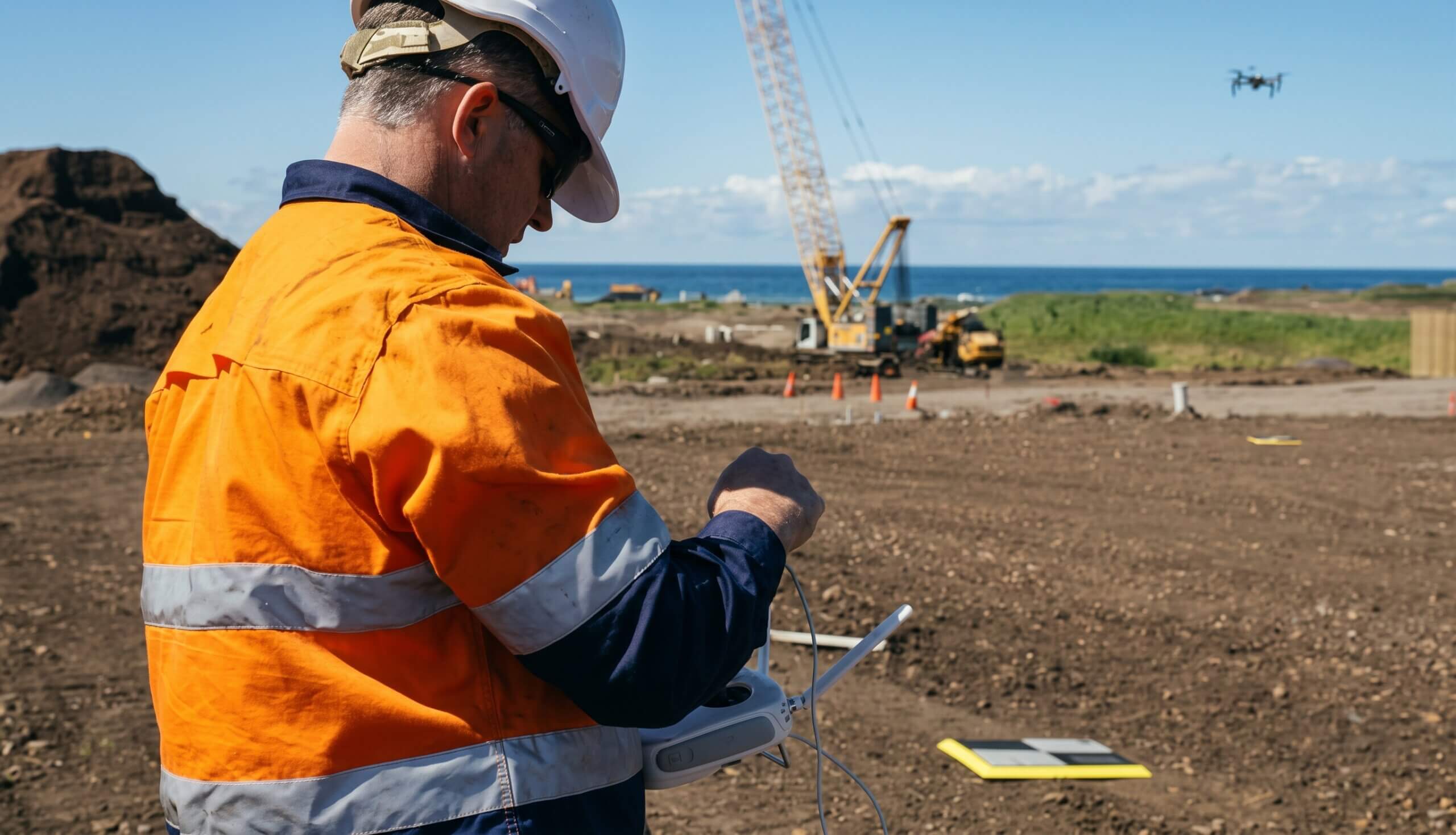
      Drone pilot in hi-vis flying a drone next to a crane, with an AeroPoint on the floor.

      Things To Know About Ground Control in Drone Surveying

      Ground control is the go-to option for turning drone data into highly accurate, survey-grade models.…
      DJI M4E flying in the sky

      Propeller’s Drone Guide: DJI Solutions for Commercial Operations

      At Propeller we love testing new drone hardware and we are processing hundreds of drone…

      Telecom Tower Inspection using DJI Phantom 4 Pro: Step-by-Step Guide

      A few weeks ago a new DJI Phantom 4 Pro was delivered to our office.…