The real cost of catching design variance too late

Read Time: 6 mins
Quick links
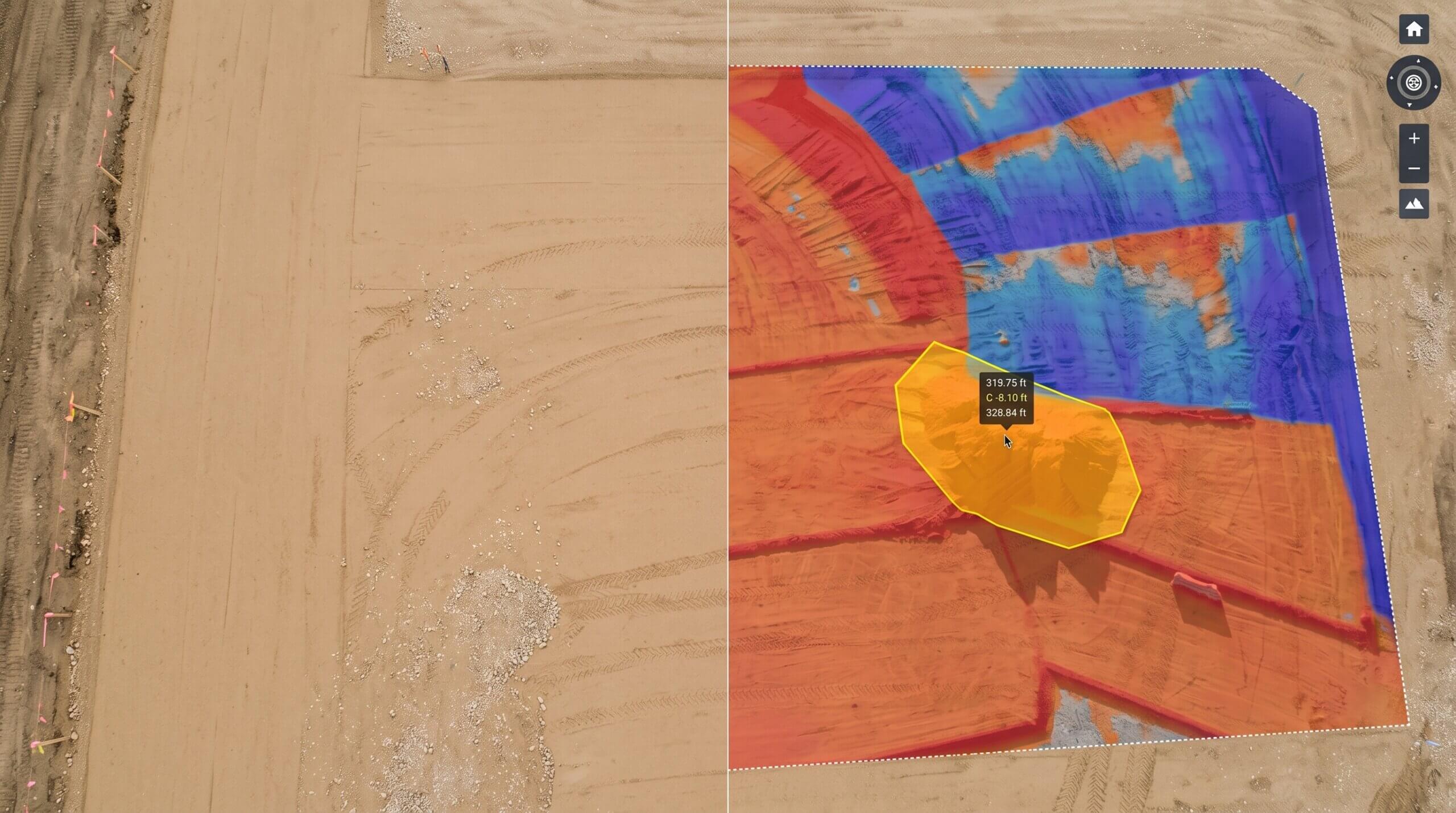
    Cut/fill heat map showing design variance across an earthworks site, with colour-coded elevation differences

    Design variance found mid-phase is a quick fix. Found near handover, the same variance can mean breaking out finished work, remobilizing crews, and delaying the next phase. This guide explains why timing is the real cost driver, and what earthworks teams are doing to catch grade issues while there’s still room to act.
    A grade issue caught in time is a quick fix. Caught too late, it’s a rework problem.

    Picture this: a survey comes back two weeks before handover. The site doesn’t match the design. Not dramatically. But enough. A subgrade that’s running high in one section. A slope that drifted a degree off spec. A drainage area that won’t drain the way the plan says it should.

    On its own, none of that is catastrophic. But the next crew is already scheduled. The paving team is coming. The GC is waiting on sign-off. And fixing a subgrade after the asphalt is down is a completely different conversation than fixing it before the paver arrives.

    The variance didn’t get worse between mid-phase and handover. The cost to fix it did.

    What design variance is (and why it happens)

    Design variance is the difference between what the approved design said the site should look like and what the site actually looks like. It shows up in a lot of ways: a subgrade running too high before paving, an embankment slope a little steeper than specified, a drainage feature that’s under-filled and won’t function as designed.

    It happens for completely normal reasons. Equipment doesn’t place material with millimetre precision. Conditions change mid-project. Designs get revised after work has started. By the time a new design version reaches the field, some of the work is already done against the old one.

    None of that is a disaster. Variance is part of earthworks. What determines whether it stays manageable or becomes expensive is how quickly you see it, and whether you’re comparing against the right design at the right time.

    Why timing changes everything

    Here’s a simple way to feel this. Take a subgrade that’s 50mm high in one area. Depending on when you find it, that variance has a completely different price tag.

    Found during active earthworks: A crew with the right equipment can fix it in a shift. You’re looking at a few hours of rework, no downstream impact, no drama.

    Found just before paving: Still fixable. But now you need to delay the paving crew, bring equipment back in, recheck the area, and confirm it before the paver moves on. Costs more, takes longer, and starts creating schedule pressure.

    Found after paving: Now you’re breaking out finished pavement, correcting the subgrade, and laying pavement again. Add mobilization, inspection, and project delay, and you’re looking at a cost that’s a multiple of what it would have been a week earlier.

    Found at phase closeout or handover: Every trade that followed the earthworks crew may be affected. The remediation plan gets complicated fast. The cost conversation is uncomfortable, and the timeline impact spreads into the next phase.

    The variance is the same size in every one of those scenarios. The cost to fix it is not. That’s why regular design conformance checks during active work aren’t just a quality practice: they’re a cost control decision.

    There’s a reason teams who track conformance throughout the project close phases with less friction. They’re not catching bigger problems. They’re catching the same problems earlier, when fixing them is still simple.

    The same 50mm variance

    Four different price tags

    During active earthworks

    Before anything else starts

    A crew with the right equipment can fix it in a shift. No downstream impact.

    $

    Low

    Just before paving

    Paving crew is scheduled

    Delay the paving crew, bring equipment back, recheck and confirm. Schedule pressure starts here.

    $$

    Moderate

    After paving

    Finished pavement on top

    Break out finished pavement, re-grade, re-lay. Add mobilisation, inspection, and project delay.

    $$$

    High

    At phase closeout

    Every trade built on top

    Every trade that followed may be affected. Remediation plans get complicated fast. Timeline impact spreads into the next phase.

    $$$$

    Very high

    The variance is the same size in every scenario. The cost to fix it is not.

    Caught before breaking ground: what early detection looks like

    Middlesex Corporation, one of the largest heavy civil contractors in the US, uses Trimble Stratus powered by Propeller to compare drone survey data against design files across their projects. On one project, they caught a designer surface error before any ground was broken.

    “We found a designer surface error before we broke ground. That alone paid for the system many times over.”

    — Director of Survey and Construction Technology, Middlesex Corporation

    That’s the version of this story that costs nothing to fix. The crew doesn’t mobilize against a flawed design. The fix happens before earthworks begin. No rework, no delays, no renegotiation over who’s responsible for the error.

    The same approach (running a current survey against the approved design and checking for variance throughout the project) is what catches grade drift before it becomes a rework conversation. Weekly drone surveys compared against the design surface show the team exactly where the site matches the plan and where it’s starting to move off course. They act early, while fixing it is still simple.

    ⚠️ Customer proof requires Mel’s sign-off before going external. This quote is approved for use in this campaign per the Approved proof overview.

    Customer proof — Middlesex Corporation

    “We found a designer surface error before we broke ground. That alone paid for the system many times over.”

    Director of Survey and Construction Technology, Middlesex Corporation

    ⚠ Requires Mel’s sign-off before external publication

    What it takes to catch variance while there’s still time

    Teams that catch variance early tend to have a few things in common. None of it is complicated, but all of it requires a bit of intentionality.

    They survey often enough to see drift before it compounds. A weekly drone survey compared against the design surface shows grade issues at a stage where they can still be corrected cheaply. Teams relying on monthly surveys or final-stage checks often find the same issues when they’re far more expensive to fix.

    They compare against the design, not just against a previous survey. Comparing survey to survey tells you what changed on site. Comparing survey to design tells you whether what changed is a problem. Both are useful, but the second one is what catches conformance variance.

    They keep the reference design current. One of the most common causes of apparent variance isn’t a site problem at all. It’s comparing against a design version that was revised after the work was done. When the design changes, the comparison file needs to change with it. If you’re unsure which causes are most common in your workflow, this guide on false variance covers the full list.

    Propeller’s Grade Check and cut-fill-to-design tools make this comparison practical for the whole team: upload the latest design, run it against the current survey, and get a heat map showing exactly where the site is high, low, or on grade, with the specific volumes and elevations attached, timestamped, and shareable.

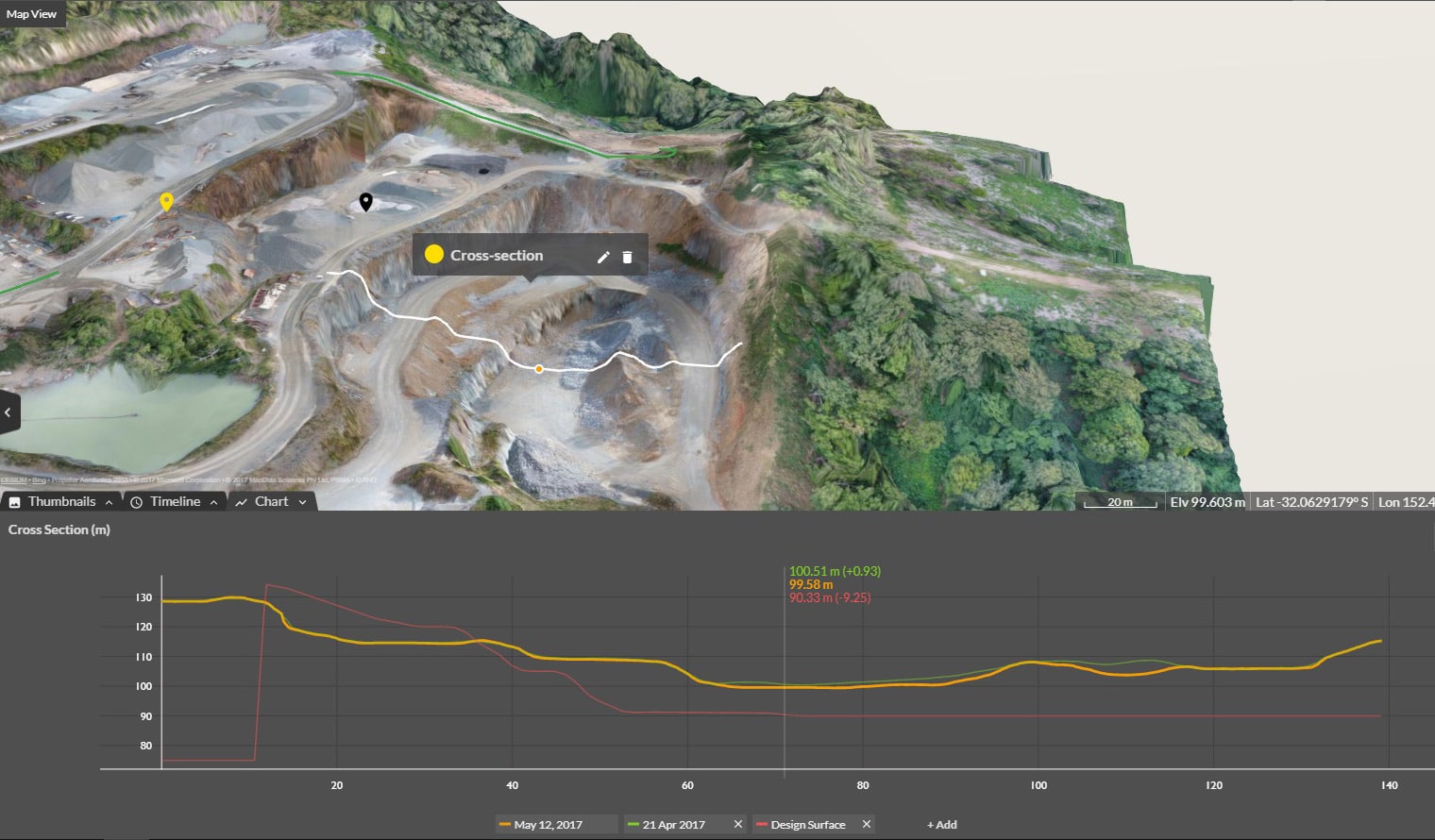
    The step-by-step version of this process, including how to set up the coordinate system, run cross-sections, check drainage, and export a conformance report, is covered in the full step-by-step guide. Worth bookmarking if you’re setting up a regular conformance workflow.

    Watch the full walkthrough on demand

    Watch on demand: This blog follows the themes from From design to defensible: catching variance before it’s buried, including the live Propeller platform walkthrough, real site examples, and the full Q&A from teams working through calibration, coordinate alignment, and design version control. Free to watch any time.


    Not sure where your team stands right now? Take the readiness quiz. It takes about two minutes and surfaces the exact gaps worth addressing first.

    Frequently asked questions

    Because more work builds on top of it. A grade issue discovered during active earthworks costs a crew a few hours to correct. The same issue found after paving requires breaking out finished material, re-grading, and re-laying. Add mobilization, inspection, and delay, and the total cost is often many times higher than if the same variance had been caught a few weeks earlier.

    Variance has many sources: equipment placing material slightly off target, design files being revised after work starts, coordinate or calibration mismatches between survey data and design surfaces, and conditions changing faster than the survey cadence can track. Most variance isn’t the result of a significant mistake. It’s small cumulative differences that go unchecked too long. The guide on false variance covers the cases where the data itself is the problem.

    Depends on how fast work is moving and what the critical milestones are. Teams on active grading or subgrade prep ahead of paving often run weekly checks. For lower-risk phases, fortnightly can work. The goal is to check often enough that any variance is still cheap to fix when you find it.

    At its simplest: a current survey, the approved design surface aligned to the same coordinate system, and a comparison between the two. The output is a cut/fill heat map showing where the site is above design, below design, or on grade, with the specific volumes and elevations attached. The step-by-step guide covers the full process, from calibration file through to exported report.

    No, and that’s the point. Conformance checks are most valuable during active work — when there’s still time to fix things cheaply. The full design conformance workflow covers both: regular checks during work to catch issues early, and defensible documentation at closeout for sign-off and pay app support.

    Quick links

      Related articles

      How to Submit GCP and Checkpoint Data in Propeller

      The Propeller Platform aims to make submitting your drone survey data as easy as possible,…

      Digital Transformation in the Construction and Earthworks Industries

      Earthworks and civil construction are growing rapidly, with more clients, more bids, and more projects,…
      A small perfect cone of dark aggregate lit from the side against a neutral background

      What is volumetric accuracy in drone surveying? (And how to evaluate it)

      Volumetric accuracy is how closely a measured volume matches the true volume on the ground,…

      Ready to learn how Propeller can power up your worksite?

      We’re happy to show you how Propeller can power your worksite, and boost productivity.

      Related articles

      Cross section survey in a matter of minutes using drone data

      With the power of drone-captured data and the Propeller Platform, surveying cross sections becomes as…

      How to Use Drone Data to Improve Landfill Performance

      If you manage a landfill, you may have been wondering how you can use drones…

      How to Collaborate Better Using Drone Data and the Propeller Platform

      Keeping everyone on your worksites up to date with the best and most recent information…